


Selling fast!
Get yours while you can.
PUL-1000
Couldn't load pickup availability
Prices valid in USA, Canada, and PR only.
 Program sequences up to four steps
*Replacement glass clamp pads here
See the current Data Sheet.
PUL-1000 is a microprocessor controlled horizontal puller for making glass micropipettes or microelectrodes used in intracellular recording, patch clamp studies, microperfusion or microinjection. The puller was designed with tight mechanical specifications and precision electronics for complete control of the pulling process and accurate reproducibility. It offers programmable sequences of up to four steps with heating, force, movement and cooling time. This allows graduated cycles for applications like patch clamp recording.
This puller is a reasonably priced, compact, versatile and reliable workhorse. The microprocessor, combined with the LCD display, makes the PUL-1000 easy to use.Tempered glass cover
The cover of the pulling chamber is made with tempered glass to minimize the temperature effect on the reproducibility of the pulled pipettes.
PUL-1000 has a high quality switching power supply for use anywhere in the world without worry about the line voltage differences. Pulling reproducibility is unaffected by line voltage fluctuation. Heating voltage can be controlled to within 0.1% accuracy even when line voltage fluctuates from 90 to 240 VAC.
The settings for both stages can be stored in memory. Up to 95 user-selectable programs can be stored for later recall. The instrument contains two factory installed and tested programs. Choose from the factory installed programs or create your own.
A glass capillary is heated by a platinum/iridium filament and pulled by a controlled force. PUL-1000 features permanent memory storage for up to 95 heat programs. It is remarkable in the flexibility and capability of producing a vast array of pipette shapes.
Pulling pipettes is an art, and reliable results depend on factors like the operating environment, the type of glass used and your technique. Understanding how the puller works is critical to manufacturing the pipettes you want.
PUL-1000 can produce pipettes with tip diameters from less than 0.1µm to 10+ µm. Microprocessor settings control the pulling automatically.
Appropriate filament selection depends on your research application, but generally Box Filaments are recommended. This configuration is particularly suitable for slice preparations where long, parallel walls will aid penetration. If you are using a box filament, the size of the square box should be approximately 1.0mm to 1.5mm larger than the outside diameter of the glass to be pulled.
| Order code | Description |
| 13834 | Replacement box filament, 2.5 mm square, platinum iridium, 2.5 mm wide (Installed by default) |
| 14074 | Replacement box filament, 3 mm square, platinum iridium, 2 mm wide |
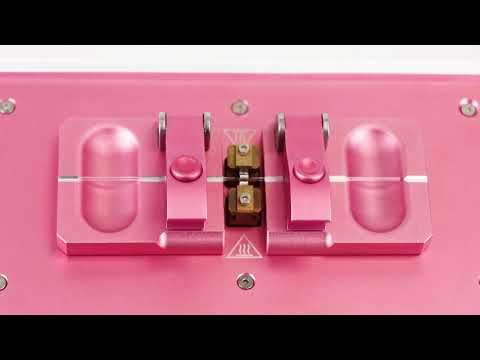
| 505976 | Replacement glass clamp pads for 1.0-1.2mm OD glass, set of 2 (translucent, default) |
| 505977 | Replacement glass clamp pads for 1.5mm OD glass, set of 2 (black) |
| 505978 | Replacement glass clamp pads for 2.0mm OD glass, set of 2 (red) |
Compare all the pullers, bevelers, microforges (application guide).



Multiple SKUs


SU-P2000

SU-P2000F


Multiple SKUs

World Precision Instruments' PUL-1000 is a microprocessor controlled, four-stage, horizontal puller for making glass micropipettes or microelectrodes used in intracellular recording, microperfusion and microinjection. It offers programmable sequences of up to four steps with complete control over the heating, force, movement and cooling time. This allows graduated cycles for a variety of applications. PUL-1000 can produce pipettes with tip diameters from less than 0.1µm to 10+ µm.

Crafting high-quality glass micropipettes is essential for precision work in microinjection, patch clamping, electrophysiology, and a wide range of microsurgical and research applications. WPI offers a complete suite of microforges, pullers, and bevelers designed to help researchers create consistent, reproducible pipette shapes tailored to their experimental needs. Whether you’re pressure-polishing patch-clamp pipettes, preparing multi-barrel assemblies, or measuring electrode impedance, the tools below provide reliable control, advanced programmability, and robust optical performance to support even the most demanding labs.

Pulling micropipettes or microelectrodes is a science and an art, requiring some finesse. Here we discuss the five major factors which can affect the shape of a pulled glass micropipette or microelectrode.

PUL-1000 is a microprocessor controlled, four-stage, horizontal puller for making glass micropipettes or microelectrodes used in intracellular recording, patch clamp, microperfusion and microinjection. The PUL-1000 is capable of producing a vast array of pipette shapes, such as a long graduated taper, a short graduated taper and a short taper bee stingers. Here's a quick introduction the PUL-1000 research puller.

The PUL-1000 is a microprocessor controlled, four-stage, horizontal puller for making glass micropipettes or microelectrodes. Here is a quick overview to get you started qui

The PUL-1000 is a microprocessor controlled, four-stage, horizontal puller for making glass micropipettes or microelectrodes. Here we will see how to load a piece of glass into the carriage.

The PUL-1000 is a microprocessor controlled, four-stage, horizontal puller for making glass micropipettes or microelectrodes. Here is how to run a program that will pull two identical microelectrodes.

The PUL-1000 is a microprocessor controlled, four-stage, horizontal puller for making glass micropipettes or microelectrodes. Here are the resolutions for some common issues with the puller.