


Selling fast!
Get yours while you can.
501706
Couldn't load pickup availability
Prices valid in USA, Canada, and PR only.


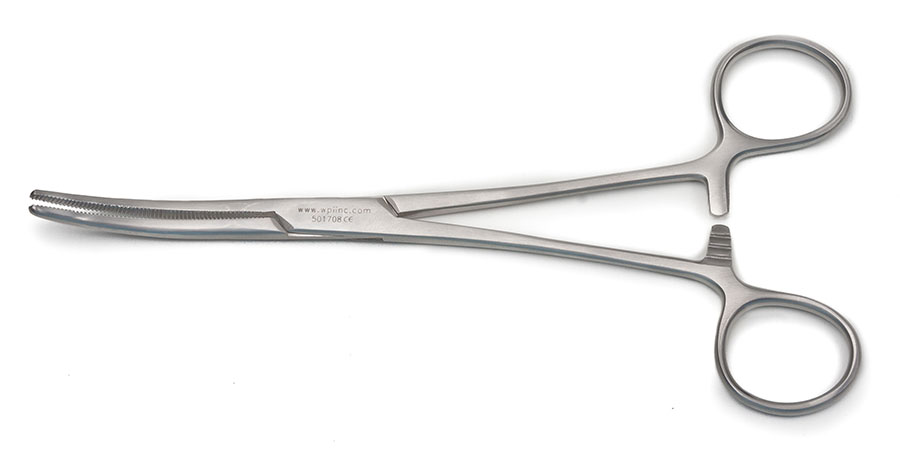

Hemostatic forceps, hemostats, are used primarily to control bleeding during surgical procedures, and they are also used for a variety of other applications. Most hemostatic forceps have ring handles and a ratchet-style, locking mechanism to adjust the tension on the forceps and to keep the jaws clamped in place, maintaining constant pressure on the tissue or blood vessel being occluded. They also have jaws with interlocking serrations or teeth for a secure grip on tissues. The tips of hemostats are often narrow and delicate, allowing for precise manipulation of tissues and vessels. They vary in size, tip shape, type of metal, and function. Here are some applications for which hemostatic forceps are uniquely designed.

Laboratory forceps are surgical instruments that come in a variety of types. Here’s a brief overview to help you choose a set of forceps for your application. Surgical forceps can be divided into two broad categories, thumb forceps (also called tweezers) and hemostatic forceps. Tweezers can be further divided into dressing forceps and tissue forceps.

Hemostatic forceps, also called ring forceps or hemostats, are common surgical instruments used in medical, veterinary, and laboratory settings to control bleeding during procedures. Hemostats are used to clamp blood vessels, tissues, or other small structures, effectively minimizing blood flow during surgical procedures. Hemostats prevent excessive bleeding for the subject and offer a clear view of the surgical site for the operator. Here’s a brief introduction to the features and uses of hemostatic forceps in a laboratory setting.