Selling fast!
Get yours while you can.
Free Shipping on web orders over $50! (USA only. Some exclusions.) Our mid-season sale is on. Shop Phones
SU-P97
Couldn't load pickup availability
Prices valid in USA, Canada, and PR only.
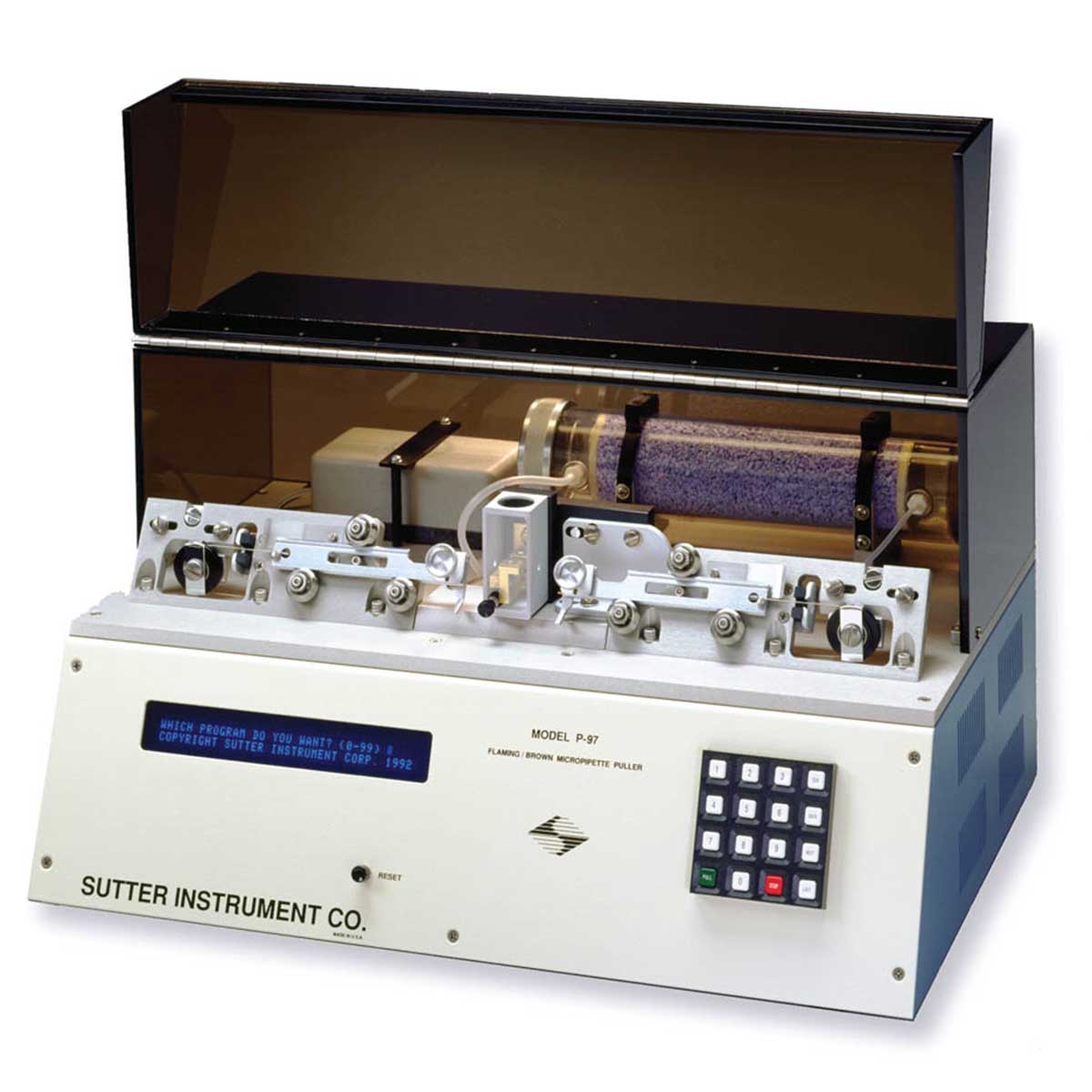
The SU-P97 Flaming/Brown type micropipette puller is ideal for fabricating micropipettes, patch pipettes and microinjection needles. While retaining many of the features of earlier models, the SU-P97 offers improvements in mechanical, electronic and software design. The result is better control of the pulling process and a higher degree of reproducibility. The SU-P97 combines a proven mechanical system with a sophisticated, programmable microprocessor controller. This programmable control of the pulling parameters allows the investigator to design application specific pipettes from a wide range of glass compositions and sizes.
Download the current SU-P97 data sheet.
A number of other features have been incorporated in the design of the SU-P97. Most apparent is the environmental chamber which surrounds the heating filament. This environmental chamber is designed to minimize the effect of changing humidity on the reproducibility of pulled pipettes. A 25% increase in power over the P-87 allows for the use of larger heating filaments, larger diameter glass and multi-barreled glass. The metal jaws that clamp the heating filament have also been redesigned to minimize heat retention. A gas delivery mode switch provides for extended cooling for large diameter and multi-barreled glass. A spring-loaded clamping mechanism has been added for easier loading of glass. A vacuum fluorescent display has been added that allows easy viewing.
Software improvements on the SU-P97 include a display of the total heat-on time to assist in program development and troubleshooting. Up to 100 programs can now be written and stored in memory, which makes the SU-P97 suitable for multiple users. These programs can now be write-protected, adding security to prevent programs from being changed or altered inadvertently. The display shows the last date and time the program was written or edited. In addition, the air pressure is included as a programmable parameter.
*Patent No.4,600,424
Micropipette Fabrication
Instructional Videos
| Dimensions | 53 x 40.6 x 30 cm (21 x 16 x 12") |
| Weight | 23 kg (50 lbs.) |
| Electrical | 115/230 V, 50/60 Hz |

$10,475.00
Multiple SKUs
Multiple SKUs
Crafting high-quality glass micropipettes is essential for precision work in microinjection, patch clamping, electrophysiology, and a wide range of microsurgical and research applications. WPI offers a complete suite of microforges, pullers, and bevelers designed to help researchers create consistent, reproducible pipette shapes tailored to their experimental needs. Whether you’re pressure-polishing patch-clamp pipettes, preparing multi-barrel assemblies, or measuring electrode impedance, the tools below provide reliable control, advanced programmability, and robust optical performance to support even the most demanding labs.
Below are some popular pullers from WPI, including Sutter pullers. Here we compare them so you can choose a system that is best suited for your application.
Pulling capillary glass into micropipettes or microelectrodes is a science and an art. Not only must you understand the environmental factors and the physics affecting each pull, but you must also know how to tweak your program to pull tips of consistent shape and size. Glass micropipettes or microelectrodes are used in intracellular recording, patch clamp, microperfusion, and microinjection. Let’s look at some factors that can affect the pulling of glass and how to adjust a program to get the micropipettes you need for your application.
When it comes to gene modification and transfection research, success often depends on the smallest details. One of the most critical factors in microinjection-based techniques is the geometry of the pipette tip.
You've calibrated your pressure settings perfectly, your timing is precise, yet you're still watching expensive reagents leak into the bath solution during microinjection. Sound familiar? This frustrating scenario plays out in labs worldwide, often leading researchers to question their pump settings or injection protocols. But after years of troubleshooting with scientists using WPI's next generation microinjection systems, one critical factor emerges repeatedly: tip geometry.
Selling fast!
Get yours while you can.