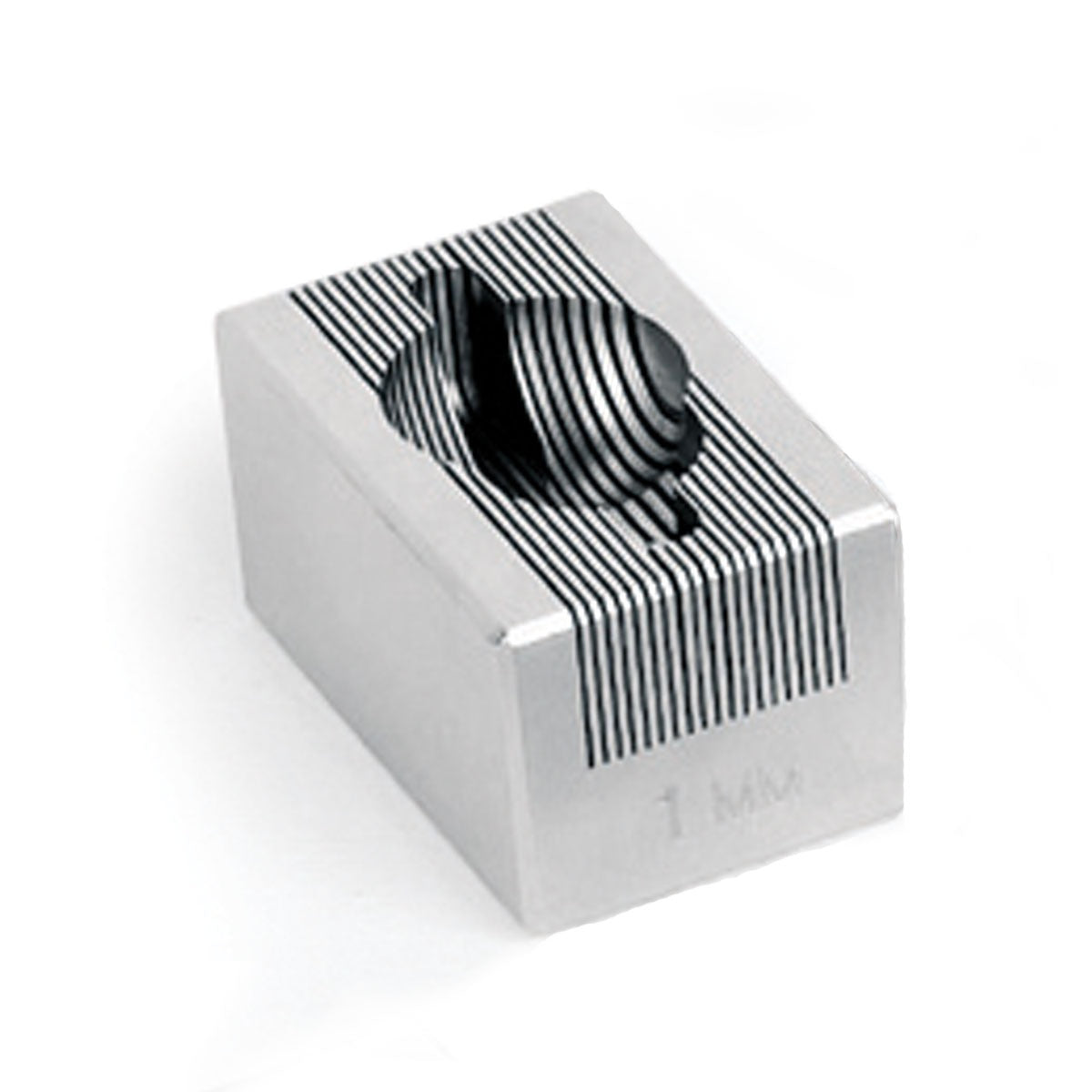
Rodent Brain Matrices, Stainless Steel

Skip to product information
1 of 8
Regular price $345
Sale price $345 Regular price

RBMS-200C

Regular price $345
Sale price $345 Regular price

Usage

Prices valid in USA, Canada, and PR only.

Rodent brain matrices are precision instruments designed to produce consistent coronal or sagittal brain sections for neuroscience research. By securely positioning freshly dissected mouse or rat brains within precision-machined channels spaced at 1 mm intervals, they help researchers create uniform slices for histology, immunohistochemistry, molecular biology, electrophysiology, lesion verification, and other neuroanatomical studies. Standardized sectioning improves reproducibility, reduces variability between specimens, and enables more accurate comparisons across experiments.


Details

WPI stainless steel rodent brain matrices are available for adult mice and rats ranging from 175 g to 600 g, with both coronal and sagittal configurations. Each matrix features an integrated olfactory notch for consistent positioning and can be chilled or sterilized when temperature control or sterile handling is required. Their durable stainless steel construction delivers years of reliable performance while providing the precision needed for repeatable brain sectioning in research laboratories.

Rodent brain matrices are commonly used with disposable scalpels or razor blades for sectioning, stereotaxic instruments for precise brain localization, microsurgical forceps for tissue handling, and brain tissue slicers when thicker or live tissue sections are required. WPI offers a complete range of neuroscience research tools to support every stage of brain dissection and tissue preparation.

Features

  • Durable stainless steel construction
  • Models available for adult mice and rats
  • Coronal and sagittal configurations
  • Precision-machined 1 mm blade guides
  • Repeatable 1 mm brain sections
  • Suitable for chilling and sterilizable
  • Integrated olfactory positioning notch

    Options

    The table below summarizes the dimensions and cavity depth for each mouse and rat brain matrix to help you select the correct model for your research.

    Stainless steel coronal brain matrix for adult mouse
    Order code Subject Section A B C D E Cavity
    Depth
    RBMS-200C Adult Mouse Coronal 3.18 11.1 8.73 19.1 12.2 7.4
    RBMS-200S Adult Mouse Sagittal 3.18 11.1 8.73 19.1 12.2 7.4
    RBMS-300C Rat, 175-300 g Coronal 4.76 15.9 12.7 36.6 23.8 7.61
    RBMS-300S Rat, 175-300 g Sagittal 4.76 15.9 12.7 36.6 23.8 7.61
    RBMS-600C Rat, 300-600 g Coronal 4.76 19.8 14.7 36.6 24.7 10.91
    RBMS-600S Rat, 300-600 g Sagittal 4.76 19.8 14.7 36.6 24.7 10.91

    All units weigh 1.0 Lb (Shipping weight), and all are stainless steel construction.

    Common Applications

    • Histology
    • Immunohistochemistry
    • Brain atlas studies
    • Neuroscience research
    • Lesion verification
    • Electrophysiology
    • Molecular biology
    • RNA extraction
    • Protein analysis
    • Cryosection preparation

    Best Practices for Brain Sectioning

    • Chill the matrix before sectioning.
    • Remove excess moisture before placing tissue.
    • Use fresh razor blades.
    • Align the olfactory notch correctly.
    • Clean between samples.

    FAQs

    How does a rodent brain matrix work?

    A rodent brain matrix supports freshly dissected brain tissue within a precision-machined cavity while evenly spaced slots guide razor blades to create uniform slices. Because every cut follows the same spacing, researchers can obtain reproducible anatomical sections between animals and across experiments.

    What is the difference between a coronal and sagittal rodent brain matrix?

    A coronal brain matrix produces slices that divide the brain from front to back, creating cross-sectional views commonly used to examine structures such as the cortex, hippocampus, thalamus, and basal ganglia. A sagittal brain matrix creates slices that divide the brain from left to right, making it easier to study midline structures, the cerebellum, brainstem, and longitudinal neural pathways. The best choice depends on the anatomical region being investigated and the requirements of your experimental protocol. WPI offers both coronal and sagittal stainless steel brain matrices for adult mice and rats to support a wide range of neuroscience applications.

    Why choose a stainless steel brain matrix instead of an acrylic brain matrix?

    Stainless steel brain matrices provide greater durability, dimensional stability, and long-term precision than acrylic alternatives. Unlike acrylic, stainless steel resists scratching, warping, and wear from repeated use, helping maintain consistent slice spacing over time. It can also be chilled before sectioning to help preserve tissue integrity and is compatible with standard laboratory sterilization procedures. For laboratories that perform frequent brain sectioning or require highly reproducible results, a stainless steel brain matrix offers superior longevity and reliable performance compared to acrylic models.

    How do I choose the right rodent brain matrix for my application?

    Selecting the right brain matrix depends on the species, animal size, and the orientation of the sections required for your study. WPI offers matrices for adult mice, rats weighing 175 to 300 g, and rats weighing 300 to 600 g, each available in both coronal and sagittal configurations. Coronal matrices are commonly used for examining structures such as the cortex, hippocampus, and basal ganglia, while sagittal matrices are preferred for studies involving the cerebellum, brainstem, and midline anatomy. Choosing a matrix that matches your animal model and experimental protocol helps ensure accurate positioning, consistent section thickness, and reproducible results.

    Can a stainless steel brain matrix be sterilized?

    Yes. WPI stainless steel brain matrices are designed to withstand standard laboratory sterilization procedures and may also be chilled before use when temperature control is important for preserving tissue integrity during sectioning. Unlike acrylic matrices, stainless steel maintains its dimensional accuracy through repeated cleaning and sterilization, making it well suited for laboratories that require long-term durability and consistent performance. Always follow your laboratory's approved cleaning and sterilization protocols to help preserve the instrument's precision and finish.

    What thickness of brain sections can a rodent brain matrix produce?

    WPI rodent brain matrices feature precision-machined guide slots spaced at 1 mm intervals, allowing researchers to produce consistent 1 mm brain sections. Individual slice thickness is determined by the spacing between the blade guides and the use of standard razor blades. Uniform section thickness improves reproducibility and helps researchers accurately compare anatomical regions across multiple specimens.


    Rodent Brain Matrices, Stainless Steel

    $345.00

    Related Products

    1 of 8