Selling fast!
Get yours while you can.
Free Shipping on web orders over $50! (USA only. Some exclusions.) Free Shipping on web orders over $50! (USA only. Some exclusions.)
Save on EVOM™ with Corning® Bundles!
503702-12
Couldn't load pickup availability
Prices valid in USA, Canada, and PR only.
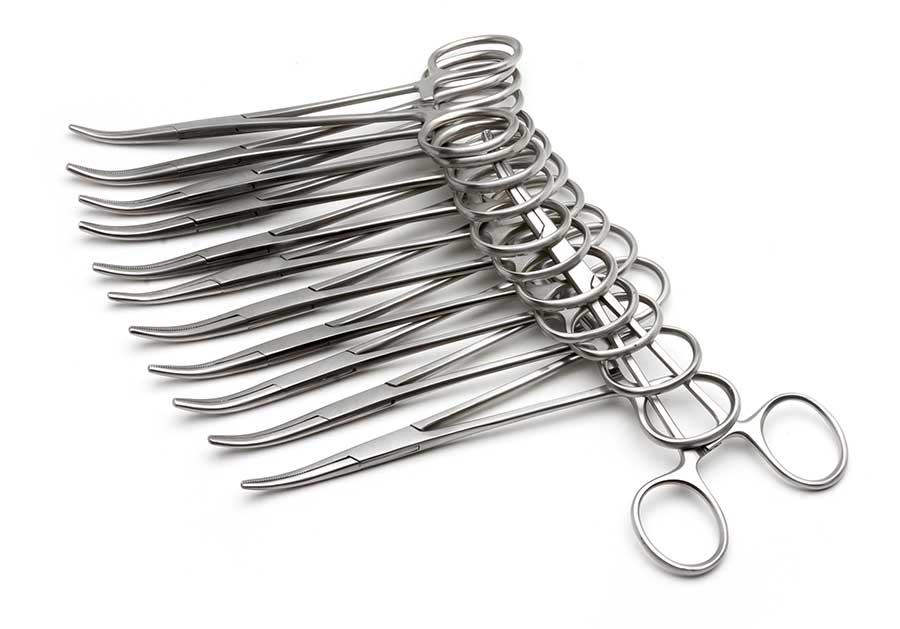
Kelly hemostatic forceps are used to clamp blood vessels and hold heavy tissues in place. Kelly forceps, both straight and curved, are available. Our forceps feature a locking ratchet and wider finger rings for easy handling.
The WPI Disposable Kelly Forceps are single-use hemostatic forceps used to clamp blood vessels and hold heavy tissue during surgical procedures. Sold in packs of 12 in either straight or curved tips, each forceps features a locking ratchet and wider finger rings for secure, comfortable handling. sterile, single-use surgical instruments designed for securely clamping blood vessels, controlling bleeding, and grasping tissue during medical, veterinary, and laboratory procedures. Measuring 14 cm (5.5 inches) in length, these forceps feature precision-serrated jaws that provide a secure grip while minimizing tissue damage.
Packaged in convenient sets of 12, these Kelly forceps are ideal for veterinary clinics, research laboratories, and teaching facilities. They are commonly used for:
Kelly forceps are commonly used to clamp blood vessels, control bleeding, grasp tissue, and hold surgical materials during medical and laboratory procedures.
Straight for general vessel clamping, in-line approach and curved for improved visibility around the clamping point, useful for deeper or angled access.
It lets you lock the jaws closed at a chosen clamping pressure, so the forceps hold the vessel or tissue securely without you having to keep squeezing the handles.
Yes, Kelly forceps are a standard hemostat used across general surgical and animal research procedures for vessel clamping and tissue handling.

$39.00
Multiple SKUs
Multiple SKUs
Laboratory forceps are surgical instruments that come in a variety of types. Here’s a brief overview to help you choose a set of forceps for your application. Surgical forceps can be divided into two broad categories, thumb forceps (also called tweezers) and hemostatic forceps. Tweezers can be further divided into dressing forceps and tissue forceps.
Hemostatic forceps, also called ring forceps or hemostats, are common surgical instruments used in medical, veterinary, and laboratory settings to control bleeding during procedures. Hemostats are used to clamp blood vessels, tissues, or other small structures, effectively minimizing blood flow during surgical procedures. Hemostats prevent excessive bleeding for the subject and offer a clear view of the surgical site for the operator. Here’s a brief introduction to the features and uses of hemostatic forceps in a laboratory setting.
One of the most common surgical instruments in a laboratory is lab forceps or tweezers. Thumb forceps used in a lab come in various lengths, and the tips can be straight, curved, angled, or angled on the side. They can be made of stainless steel, German steel, Dumoxel, Dumastar, or titanium. They can have smooth tips, serrated tips, or teeth. They are even available with tungsten carbide inserts. Each style has its own purpose.
Selling fast!
Get yours while you can.