


Selling fast!
Get yours while you can.
501839
Couldn't load pickup availability
Prices valid in USA, Canada, and PR only.
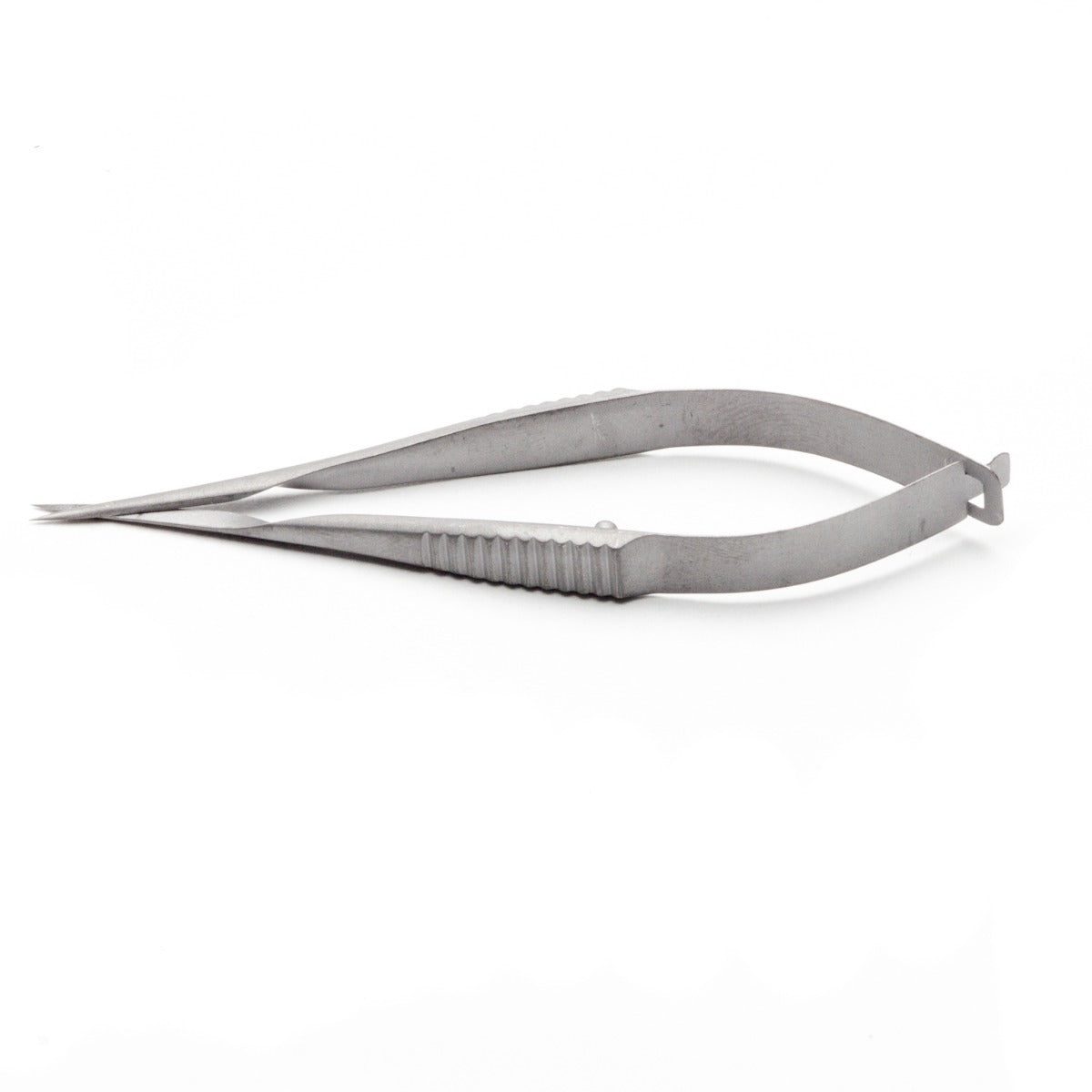
Ultra-fine 0.015 mm tips for precise microsurgical cutting with minimal disturbance to surrounding tissue

Straight tips: (501778) Best for direct, controlled cuts when the tissue is clearly visible and accessible.
Curved tips: (501839) Help improve visibility and access when working around delicate structures or within confined spaces.



Reducing hand fatigue while using surgical scissors is important, not only for your comfort, but also to maintain the precision of your work. Here are some tips to help reduce strain and minimize hand fatigue.

What makes an instrument truly microsurgical? While many instruments are described as microsurgical, the distinction goes far beyond size alone. True microsurgical instruments are engineered for precision under magnification, where factors such as tip geometry, weight, balance, spring tension, and material selection directly affect performance. This article explores the design characteristics that differentiate microsurgical instruments from standard fine instruments and explains why these features matter in neuroscience research, ophthalmology, microdissection, and small animal surgery. Understanding the engineering behind microsurgical instruments can help researchers improve precision, reduce tissue trauma, and achieve more consistent experimental outcomes.

Precision and control are vital in ophthalmic procedures, and having the right surgical scissors makes all the difference. WPI offers a large variety of high-performance scissors specifically suited for the demands of eye surgery and laboratory microdissection work. Here's a quick guide to some of the most commonly used types of ophthalmic scissors.

EVOM™ Auto High Throughput (HTS) Transepithiel Electrical Resistance (TEER) Measurement System with 24 and 96 transwell capability can switch between different 24 and 96 HTS well plates by using matching electrode arrays and plate positioners. Here we demonstrate how to switch to a 24 transwell plate after using a 96 transwell plate.

Neuroscience research demands exceptional precision when accessing and manipulating delicate neural structures. From cranial opening and microdissection to probing, retraction, and controlled microinjection, high-quality surgical instruments play a critical role in experimental accuracy and reproducibility. WPI offers a comprehensive range of precision tools, including microscissors, spatulas, forceps, hooks, and microsyringe systems, engineered to support reliable, repeatable workflows in university, research, and laboratory environments.

This article shows you how to appropriately care for your surgical insturments to ensure long lasting, highly functioning tools for your application.