Selling fast!
Get yours while you can.
Free Shipping on web orders over $50! (USA only. Some exclusions.) Our mid-season sale is on. Shop Phones
500451
Couldn't load pickup availability
Prices valid in USA, Canada, and PR only.
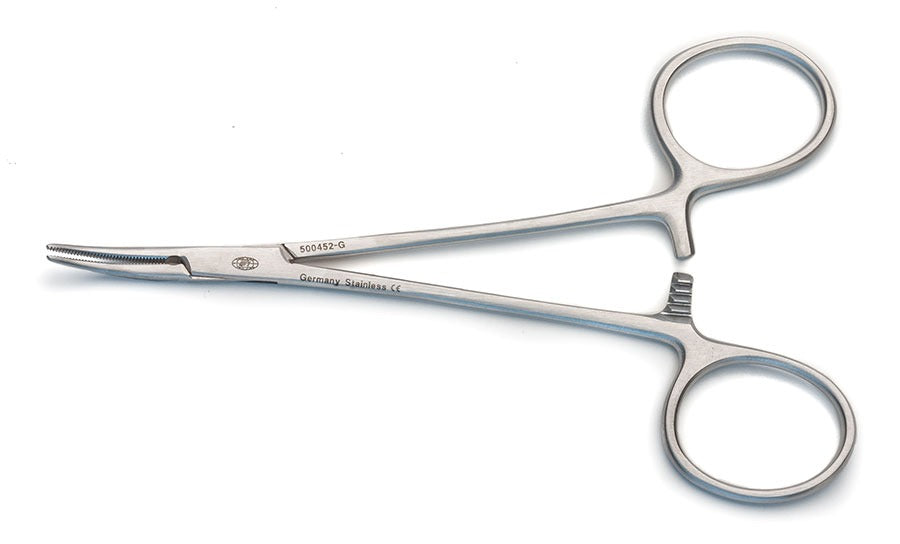
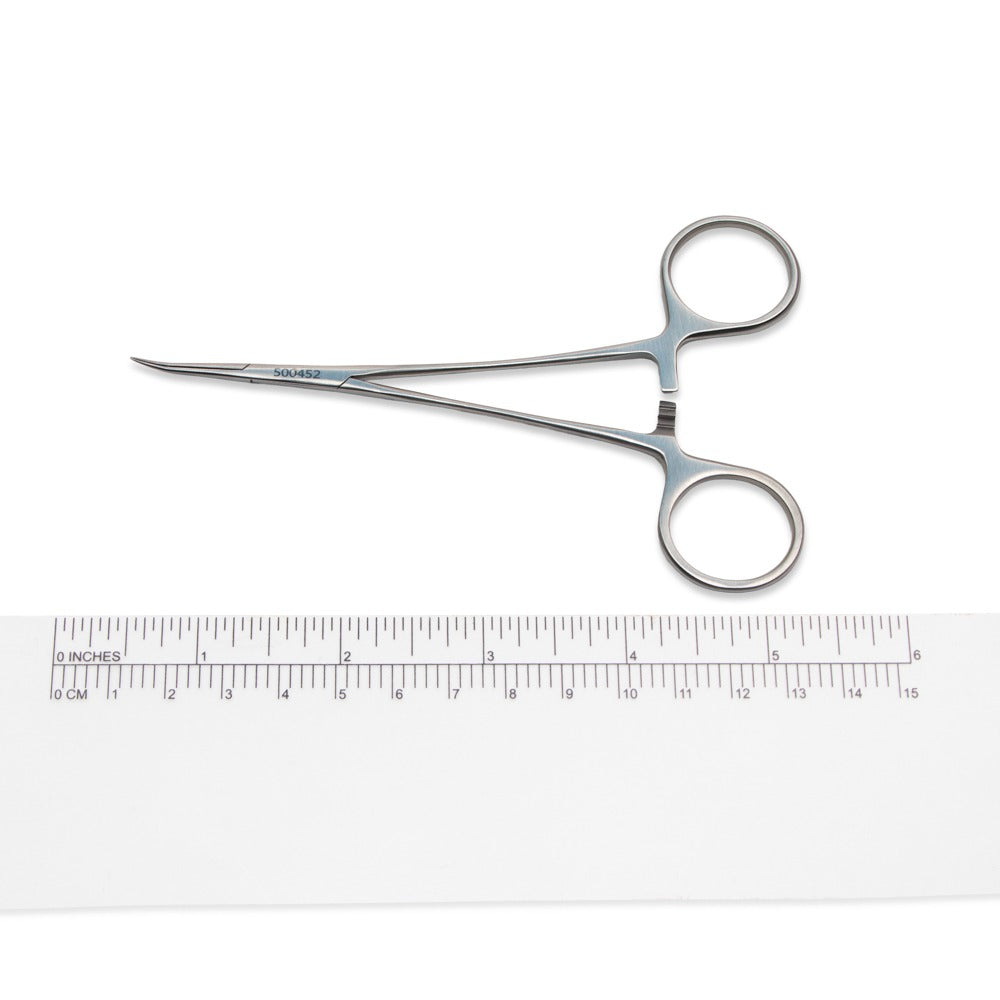
Micro Mosquito Forceps, also known as microsurgical mosquito forceps or micro hemostatic forceps, are designed for extremely delicate and precise surgical procedures. Micro Mosquito Forceps are significantly smaller in size compared to regular mosquito forceps. These are 12.5 cm (5") long with fine tips. Looking at the end of the tip of one blade of these forceps, the dimensions are 0.4 mm thick and 0.8 mm wide.
You can count on our Micro Mosquito Forceps for precise manipulation of very small tissues or delicate structures in tight spaces. The tips of Micro Mosquito Forceps are extremely thin, enabling them to grasp and manipulate tiny structures with precision. Available tips include straight, curved, and right angled. Micro Mosquito Forceps give you a gentle yet secure grip on delicate tissues. The jaws are serrated for a firm grasp with minimal tissue trauma.
These forceps are designed to be lightweight, minimizing hand fatigue. Due to their small size, mosquito forceps typically call for a fingertip grip technique, where the instrument is held between the fingertips rather than the traditional palm grip. This technique allows for increased sensitivity and control over the forceps' movements. These fine surgical instruments are manufactured from surgical grade stainless steel or premium German steel. They are autoclavable or suitable for chemical sterilization. To preserve the useable life of your surgical instruments, always clean them properly when you finish using them.
| Order code | Tip Shape |
| 500451 | Straight |
| 500451-G | Straight, German |
| 500452 | Curved |
| 500452-G | Curved, German |
| 503360 | Right Angle |

$67.00
Hemostatic forceps, hemostats, are used primarily to control bleeding during surgical procedures, and they are also used for a variety of other applications. Most hemostatic forceps have ring handles and a ratchet-style, locking mechanism to adjust the tension on the forceps and to keep the jaws clamped in place, maintaining constant pressure on the tissue or blood vessel being occluded. They also have jaws with interlocking serrations or teeth for a secure grip on tissues. The tips of hemostats are often narrow and delicate, allowing for precise manipulation of tissues and vessels. They vary in size, tip shape, type of metal, and function. Here are some applications for which hemostatic forceps are uniquely designed.
Laboratory forceps are surgical instruments that come in a variety of types. Here’s a brief overview to help you choose a set of forceps for your application. Surgical forceps can be divided into two broad categories, thumb forceps (also called tweezers) and hemostatic forceps. Tweezers can be further divided into dressing forceps and tissue forceps.
Hemostatic forceps, also called ring forceps or hemostats, are common surgical instruments used in medical, veterinary, and laboratory settings to control bleeding during procedures. Hemostats are used to clamp blood vessels, tissues, or other small structures, effectively minimizing blood flow during surgical procedures. Hemostats prevent excessive bleeding for the subject and offer a clear view of the surgical site for the operator. Here’s a brief introduction to the features and uses of hemostatic forceps in a laboratory setting.
Selling fast!
Get yours while you can.