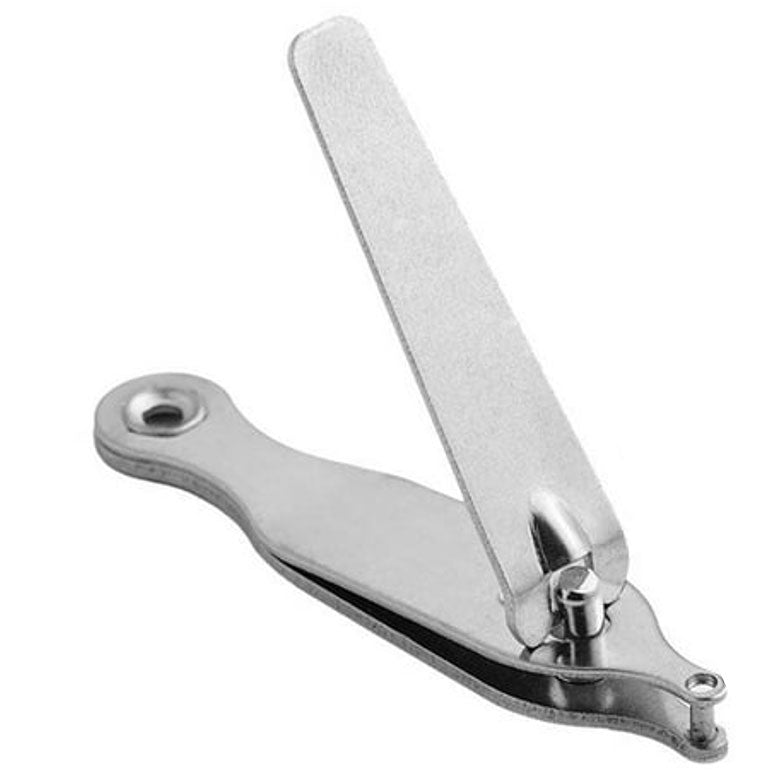
The WPI Simple Ear Punch reliably creates clean, permanent identification marks in rodent ears for use in research, breeding, genetics, and colony management. The durable stainless steel design produces consistent, easily definable notches or holes, minimizing animal handling time.
Applications
- Mouse identification
- Rat identification
- Rodent colony management
- Biomedical research
- Genetics research
- Veterinary research
- Animal breeding programs
- Laboratory animal identification
- Academic research
- Pharmaceutical research
Features
- Non-invasive ear tagging for rodents
- Permanently mark your rodents
- Maintenance-free marking of rodents
- Inexpensive when compared with tattooing, ear tags, and RFID
- Choose 1mm or 2mm hole punch
- Reusable
- Sterilizable
- Surgical grade stainless steel
Options
| Order code |
Length |
| 500075 |
5.7 cm (2.25 in.), 2 mm Diameter |
| 504485 |
5.5 cm (2.2 in.), 1 mm Diameter |
| 504486 |
5.5 cm (2.2 in.), 2 mm Diameter |
| 505660 |
7.6 cm (3 in.), 1 mm Diameter |
| 505970 |
5 cm (1.9 in.), 2 mm Diameter |
| 505971 |
7 cm (2.7 in.), 2 mm Diameter |
Why Choose an Ear Punch?
Ear punching is a widely used identification method in laboratory animal research because it creates permanent identification marks without requiring tags or additional identification devices. Researchers can use standardized ear punch patterns to uniquely identify each animal while maintaining accurate colony records.
Ear Punch vs. Ear Tags
| Ear Punch |
Ear Tags |
| Permanent identification marks |
Numbered tag identification |
| No tag remains on the animal |
Visible numbered tag |
| No replacement tags required |
Tags may need replacement if lost |
| Ideal for standardized notch systems |
Ideal for numbered individual identification |