Spedizione gratuita sugli ordini online superiori a $50! (Solo USA. Alcune esclusioni.)Spedizione gratuita sugli ordini online superiori a $50! (Solo USA. Alcune esclusioni.)
Prezzi validi solo negli Stati Uniti, in Canada e a Porto Rico.
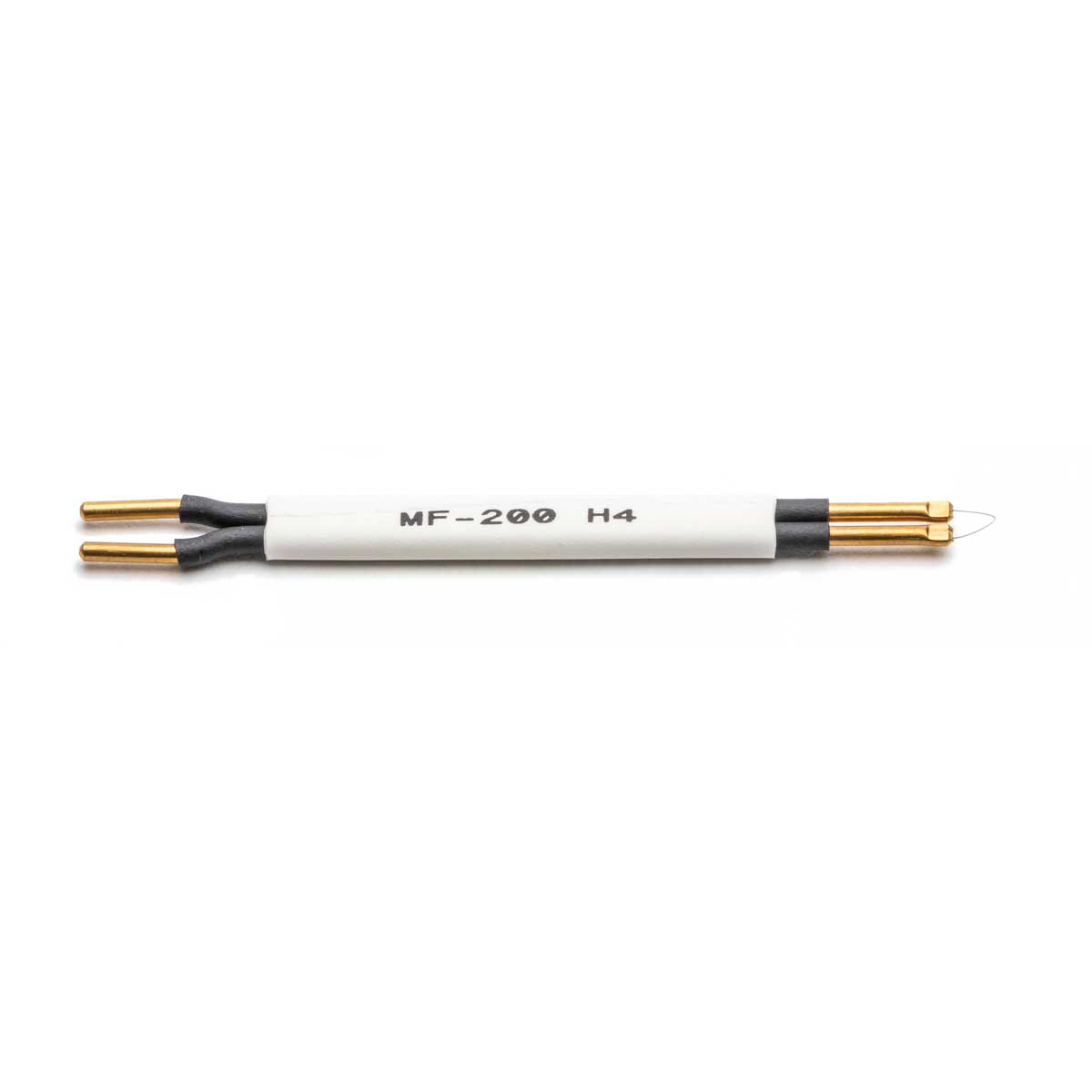
A microforge is a designed for the precise manipulation and fabrication of micro- and nanoscale structures like fine-tip electrodes for electrophysiological experiments. These electrodes can be customized for specific applications, such as recording or stimulating neural activity in cells or tissues. Researchers also use microforges to pull glass micropipettes to create fine tips with controlled dimensions. These micropipettes are commonly used in cellular and molecular biology techniques, such as patch clamp recording and microinjection.In various biological and chemical applications, microforges are used to modify the shape and size of glass capillaries. This is useful for creating specialized tools for microinjections, sample handling, and other tasks. Researchers can tailor the fabrication process to meet the specific needs of their experiments, making microforges an integral part of many scientific disciplines. The WPI microforge has a platinum/iridium filament. Due to their high melting points and thermal stability, platinum/iridium filaments tend to have a longer operational life compared to some other filament materials. This can reduce the frequency of filament replacement and associated maintenance tasks. The H2 filament is designed for use with WPI MF200 microforge, and they come in three sizes. Thinner filaments generally allow for higher precision due to their ability to create finer tips. However, thinner filaments may also be more delicate and may take longer to fabricate structures. Thicker filaments may be preferred when speed is a priority, and extreme precision is not a primary concern. Thicker filaments are generally stiffer and may provide more durability. Depending on the application, you may prefer a thicker filament for tasks that require a more robust or rigid tool. Thicker filaments may be less prone to bending or breaking during use.
ACCESSORI
Dettagli
Caratteristiche
Filamento in filo di platino/iridio
3 calibri disponibili
Per pipette da 100-200 um
Opzioni
Codice d'ordine
Nome prodotto
Descrizione
MF200-H2
Filamento riscaldante di ricambio per microfucinatore MF200, calibro grande
Calibro grande da .004"
0.49" di lunghezza
MF200-H3
Filamento riscaldante di ricambio per microfucinatore MF200, calibro medio
Calibro medio da .002"
0.25" di lunghezza
MF200-H4
Filamento riscaldante di ricambio per microfucinatore MF200, calibro piccolo
W. Ouyang, H.C. Hemmings, Jr. "Depression by Isoflurane of the Action Potential and Underlying Voltage-Gated Ion Currents in Isolated Rat Neurohypophysial Nerve Terminals" J of Pharmacology and Experimental Therapeutics 312. 2005: 801-808
Filamento riscaldante di ricambio per microforgia MF200
$185.00
Sta andando a ruba!
Prendilo finché sei in tempo.
PIÙ VENDUTO
NUOVO
NUOVO!
POPOLARE
SCELTA MIGLIORE
Scorri fino all'inizio della pagina
Scegliendo una selezione si ottiene un aggiornamento completo della pagina.