Se vend rapidement !
Procurez-vous le vôtre tant qu'il en reste.
Votre panier est vide
Continuer les achatsVotre panier
Total estimé
$0.00 USD
Livraison gratuite pour les commandes en ligne de plus de 50 $ ! (États-Unis uniquement. Certaines exclusions s'appliquent.) Livraison gratuite pour les commandes en ligne de plus de 50 $ ! (États-Unis uniquement. Certaines exclusions s'appliquent.)
RBMS-200C
Impossible de charger la disponibilité du service de retrait
Prix valables uniquement aux États-Unis, au Canada et à Porto Rico.
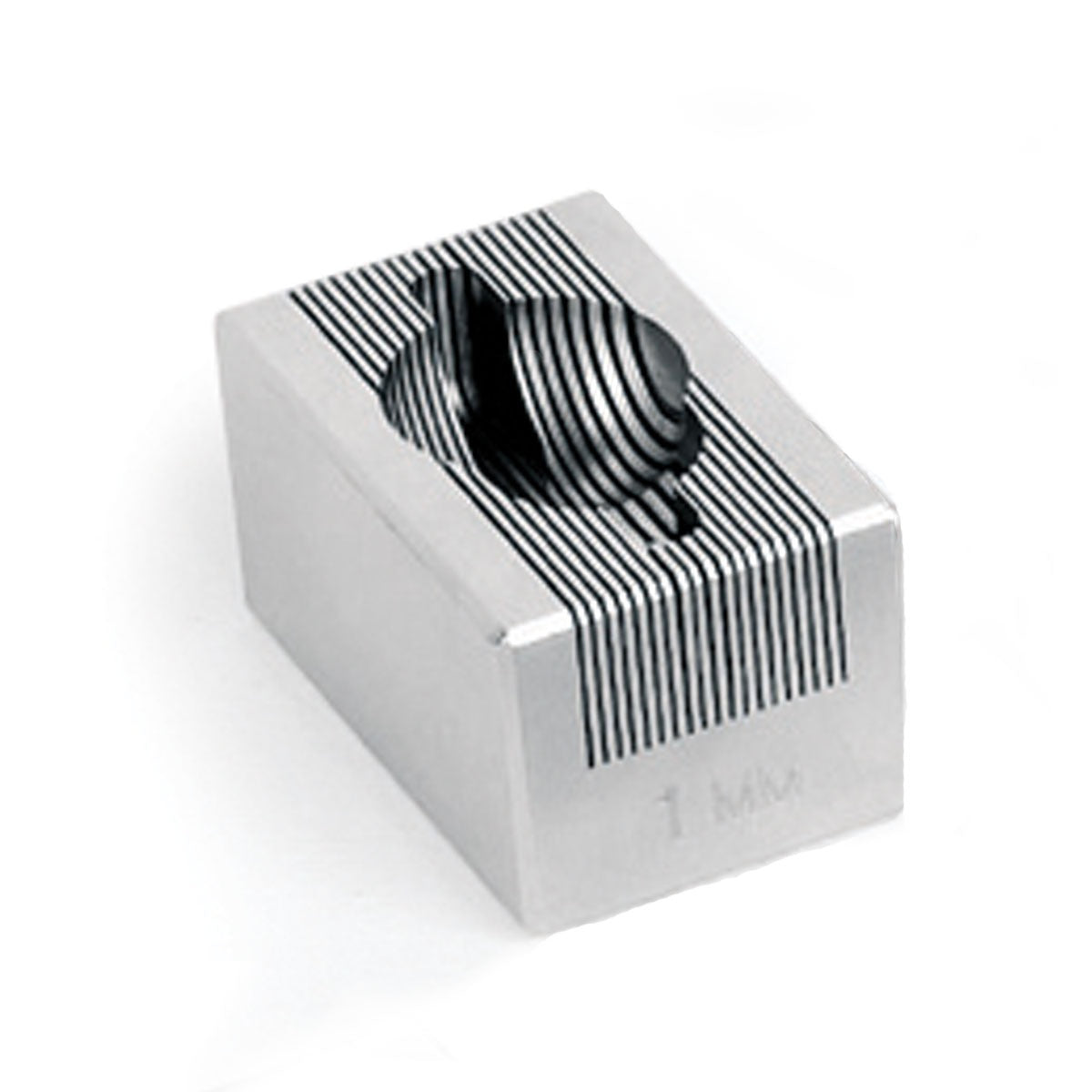
En utilisant une matrice cérébrale WPI, vous pouvez obtenir des tranches cérébrales fines et uniformes, ce qui est crucial pour l'analyse histologique, l'immunohistochimie, la biologie moléculaire, et plus encore. Cette constance est essentielle pour des comparaisons précises entre différents cerveaux et conditions expérimentales. Ces matrices cérébrales pour rongeurs WPI sont fabriquées en acier inoxydable, un matériau durable. Elles possèdent des canaux ou fentes découpés avec précision qui maintiennent le cerveau en place pendant la découpe. Choisissez votre matrice cérébrale en fonction de votre espèce (souris ou rat) et de la taille de l’animal. Les matrices cérébrales WPI sont conçues pour des coupes sagittales ou coronales. Ces matrices cérébrales vous offrent des tranches constantes de 1 mm d’épaisseur, et l’encoche olfactive spinale est découpée dans chaque matrice cérébrale. Les matrices peuvent être refroidies et stérilisées. Elles sont utiles lorsque le transfert de chaleur ou le maintien d’une plage de température spécifique est nécessaire. Obtenez une découpe cérébrale standardisée et précise. Utilisez les matrices cérébrales WPI pour garantir la reproductibilité et la précision de vos expériences afin de mieux comprendre la structure et la fonction du cerveau des rongeurs.
| Code de commande | Sujet | Section | Un | B | C | D | E |
Cavité Profondeur |
| RBMS-200C | Souris adulte | Coronal | 3.18 | 11.1 | 8.73 | 19.1 | 12.2 | 7.4 |
| RBMS-200S | Souris adulte | Sagittal | 3.18 | 11.1 | 8.73 | 19.1 | 12.2 | 7.4 |
| RBMS-300C | Rat, 175-300 g | Coronal | 4.76 | 15.9 | 12.7 | 36.6 | 23.8 | 7.61 |
| RBMS-300S | Rat, 175-300 g | Sagittal | 4.76 | 15.9 | 12.7 | 36.6 | 23.8 | 7.61 |
| RBMS-600C | Rat, 300-600 g | Coronal | 4.76 | 19.8 | 14.7 | 36.6 | 24.7 | 10.91 |
| RBMS-600S | Rat, 300-600 g | Sagittal | 4.76 | 19.8 | 14.7 | 36.6 | 24.7 | 10.91 |
Toutes les unités pèsent 1,0 lb (poids d'expédition), et toutes sont en acier inoxydable.
A rodent brain matrix supports freshly dissected brain tissue within a precision-machined cavity while evenly spaced slots guide razor blades to create uniform slices. Because every cut follows the same spacing, researchers can obtain reproducible anatomical sections between animals and across experiments.
A coronal brain matrix produces slices that divide the brain from front to back, creating cross-sectional views commonly used to examine structures such as the cortex, hippocampus, thalamus, and basal ganglia. A sagittal brain matrix creates slices that divide the brain from left to right, making it easier to study midline structures, the cerebellum, brainstem, and longitudinal neural pathways. The best choice depends on the anatomical region being investigated and the requirements of your experimental protocol. WPI offers both coronal and sagittal stainless steel brain matrices for adult mice and rats to support a wide range of neuroscience applications.
Stainless steel brain matrices provide greater durability, dimensional stability, and long-term precision than acrylic alternatives. Unlike acrylic, stainless steel resists scratching, warping, and wear from repeated use, helping maintain consistent slice spacing over time. It can also be chilled before sectioning to help preserve tissue integrity and is compatible with standard laboratory sterilization procedures. For laboratories that perform frequent brain sectioning or require highly reproducible results, a stainless steel brain matrix offers superior longevity and reliable performance compared to acrylic models.
Selecting the right brain matrix depends on the species, animal size, and the orientation of the sections required for your study. WPI offers matrices for adult mice, rats weighing 175 to 300 g, and rats weighing 300 to 600 g, each available in both coronal and sagittal configurations. Coronal matrices are commonly used for examining structures such as the cortex, hippocampus, and basal ganglia, while sagittal matrices are preferred for studies involving the cerebellum, brainstem, and midline anatomy. Choosing a matrix that matches your animal model and experimental protocol helps ensure accurate positioning, consistent section thickness, and reproducible results.
Yes. WPI stainless steel brain matrices are designed to withstand standard laboratory sterilization procedures and may also be chilled before use when temperature control is important for preserving tissue integrity during sectioning. Unlike acrylic matrices, stainless steel maintains its dimensional accuracy through repeated cleaning and sterilization, making it well suited for laboratories that require long-term durability and consistent performance. Always follow your laboratory's approved cleaning and sterilization protocols to help preserve the instrument's precision and finish.
WPI rodent brain matrices feature precision-machined guide slots spaced at 1 mm intervals, allowing researchers to produce consistent 1 mm brain sections. Individual slice thickness is determined by the spacing between the blade guides and the use of standard razor blades. Uniform section thickness improves reproducibility and helps researchers accurately compare anatomical regions across multiple specimens.

$345.00
Plusieurs UGS
Plusieurs UGS
Plusieurs UGS
Plusieurs UGS
Plusieurs UGS
Plusieurs UGS
501988
Plusieurs UGS
Se vend rapidement !
Procurez-vous le vôtre tant qu'il en reste.