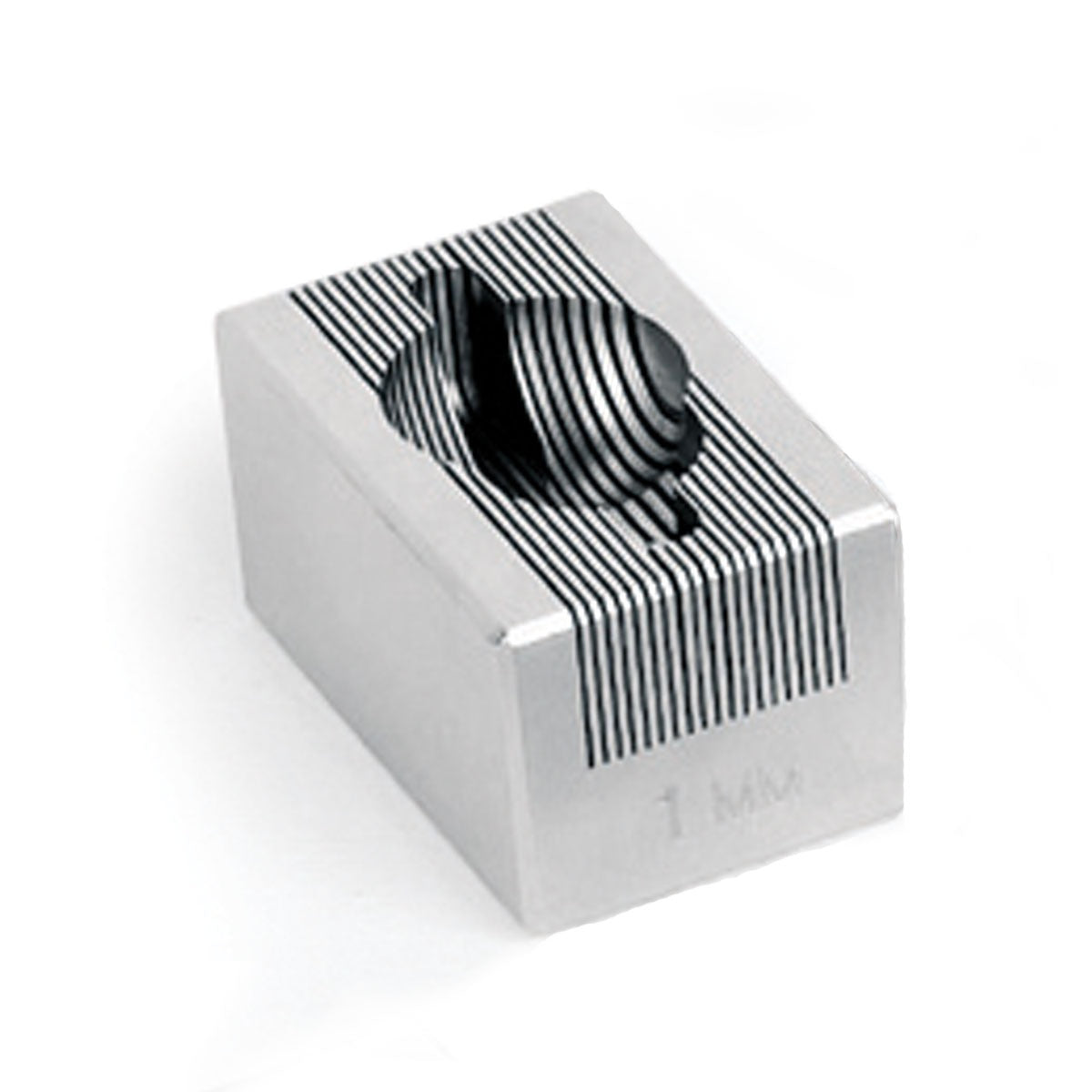
Matrices cerebrales para roedores, Acero inoxidable

Ir directamente a la información del producto
1 de 8
Precio habitual $345
Precio de oferta $345 Precio habitual

RBMS-200C

Precio habitual $345
Precio de oferta $345 Precio habitual

Uso

Precios válidos solo en EE. UU., Canadá y Puerto Rico.

Usando una matriz cerebral WPI, puedes obtener cortes cerebrales delgados y uniformes, lo cual es crucial para el análisis histológico, inmunohistoquímica, biología molecular y más. Esta consistencia es esencial para comparaciones precisas entre diferentes cerebros y condiciones experimentales. Estas matrices cerebrales para roedores WPI están hechas de acero inoxidable, un material duradero. Tienen canales o ranuras de corte preciso que mantienen el cerebro en su lugar durante el corte. Elige tu matriz cerebral según la especie (ratón o rata) y el tamaño del animal. Las matrices cerebrales WPI están diseñadas para cortes sagitales o coronales. Estas matrices cerebrales te ofrecen cortes consistentes de 1 mm de grosor, y la muesca olfatoria espinal está incluida en cada matriz cerebral. Las matrices pueden enfriarse y esterilizarse. Son útiles cuando se requiere transferencia de calor o mantener un rango específico de temperatura. Obtén secciones cerebrales estandarizadas y precisas. Usa matrices cerebrales WPI para asegurar la reproducibilidad y precisión de tus experimentos para una mejor comprensión de la estructura y función del cerebro de roedores.


Detalles

Las matrices cerebrales para roedores de acero inoxidable de WPI están disponibles para ratones y ratas adultos que van de 175 g a 600 g, con configuraciones coronal y sagital. Cada matriz cuenta con una muesca olfativa integrada para un posicionamiento consistente y puede enfriarse o esterilizarse cuando se requiere control de temperatura o manipulación estéril. Su construcción duradera en acero inoxidable ofrece años de rendimiento confiable mientras proporciona la precisión necesaria para secciones cerebrales repetibles en laboratorios de investigación.

Las matrices cerebrales para roedores se usan comúnmente con bisturíes desechables o cuchillas de afeitar para seccionar, instrumentos estereotáxicos para la localización precisa del cerebro, pinzas microquirúrgicas para manipulación de tejidos y cortadoras de tejido cerebral cuando se requieren secciones más gruesas o de tejido vivo. WPI ofrece una gama completa de herramientas para investigación en neurociencia que apoyan cada etapa de la disección cerebral y preparación de tejidos.

Características

  • Construcción duradera en acero inoxidable
  • Modelos disponibles para ratones y ratas adultos
  • Configuraciones coronal y sagital
  • Guías de cuchilla de 1 mm mecanizadas con precisión
  • Secciones cerebrales repetibles de 1 mm
  • Apta para enfriamiento y esterilizable
  • Muesca integrada para posicionamiento olfativo

    Opciones

    La tabla a continuación resume las dimensiones y la profundidad de la cavidad para cada matriz cerebral de ratón y rata para ayudarle a seleccionar el modelo correcto para su investigación.

    Matriz cerebral coronal de acero inoxidable para ratón adulto
    Código de pedido Sujeto Sección A B C D E Cavidad
    Profundidad
    RBMS-200C Ratón adulto Coronal 3.18 11.1 8.73 19.1 12.2 7.4
    RBMS-200S Ratón adulto Sagital 3.18 11.1 8.73 19.1 12.2 7.4
    RBMS-300C Rata, 175-300 g Coronal 4.76 15.9 12.7 36.6 23.8 7.61
    RBMS-300S Rata, 175-300 g Sagital 4.76 15.9 12.7 36.6 23.8 7.61
    RBMS-600C Rata, 300-600 g Coronal 4.76 19.8 14.7 36.6 24.7 10.91
    RBMS-600S Rata, 300-600 g Sagital 4.76 19.8 14.7 36.6 24.7 10.91

    Todas las unidades pesan 1.0 lb (peso de envío) y todas están construidas en acero inoxidable.

    Aplicaciones comunes

    • Histología
    • Inmunohistoquímica
    • Estudios de atlas cerebral
    • Investigación en neurociencia
    • Verificación de lesiones
    • Electrofisiología
    • Biología molecular
    • Extracción de ARN
    • Análisis de proteínas
    • Preparación de criosecciones

    Mejores prácticas para el corte cerebral

    • Enfríe la matriz antes de seccionar.
    • Elimine el exceso de humedad antes de colocar el tejido.
    • Use cuchillas de afeitar nuevas.
    • Alinee correctamente la muesca olfativa.
    • Limpie entre muestras.

    Preguntas frecuentes

    How does a rodent brain matrix work?

    A rodent brain matrix supports freshly dissected brain tissue within a precision-machined cavity while evenly spaced slots guide razor blades to create uniform slices. Because every cut follows the same spacing, researchers can obtain reproducible anatomical sections between animals and across experiments.

    What is the difference between a coronal and sagittal rodent brain matrix?

    A coronal brain matrix produces slices that divide the brain from front to back, creating cross-sectional views commonly used to examine structures such as the cortex, hippocampus, thalamus, and basal ganglia. A sagittal brain matrix creates slices that divide the brain from left to right, making it easier to study midline structures, the cerebellum, brainstem, and longitudinal neural pathways. The best choice depends on the anatomical region being investigated and the requirements of your experimental protocol. WPI offers both coronal and sagittal stainless steel brain matrices for adult mice and rats to support a wide range of neuroscience applications.

    Why choose a stainless steel brain matrix instead of an acrylic brain matrix?

    Stainless steel brain matrices provide greater durability, dimensional stability, and long-term precision than acrylic alternatives. Unlike acrylic, stainless steel resists scratching, warping, and wear from repeated use, helping maintain consistent slice spacing over time. It can also be chilled before sectioning to help preserve tissue integrity and is compatible with standard laboratory sterilization procedures. For laboratories that perform frequent brain sectioning or require highly reproducible results, a stainless steel brain matrix offers superior longevity and reliable performance compared to acrylic models.

    How do I choose the right rodent brain matrix for my application?

    Selecting the right brain matrix depends on the species, animal size, and the orientation of the sections required for your study. WPI offers matrices for adult mice, rats weighing 175 to 300 g, and rats weighing 300 to 600 g, each available in both coronal and sagittal configurations. Coronal matrices are commonly used for examining structures such as the cortex, hippocampus, and basal ganglia, while sagittal matrices are preferred for studies involving the cerebellum, brainstem, and midline anatomy. Choosing a matrix that matches your animal model and experimental protocol helps ensure accurate positioning, consistent section thickness, and reproducible results.

    Can a stainless steel brain matrix be sterilized?

    Yes. WPI stainless steel brain matrices are designed to withstand standard laboratory sterilization procedures and may also be chilled before use when temperature control is important for preserving tissue integrity during sectioning. Unlike acrylic matrices, stainless steel maintains its dimensional accuracy through repeated cleaning and sterilization, making it well suited for laboratories that require long-term durability and consistent performance. Always follow your laboratory's approved cleaning and sterilization protocols to help preserve the instrument's precision and finish.

    What thickness of brain sections can a rodent brain matrix produce?

    WPI rodent brain matrices feature precision-machined guide slots spaced at 1 mm intervals, allowing researchers to produce consistent 1 mm brain sections. Individual slice thickness is determined by the spacing between the blade guides and the use of standard razor blades. Uniform section thickness improves reproducibility and helps researchers accurately compare anatomical regions across multiple specimens.


    Matrices cerebrales para roedores, Acero inoxidable

    $345.00

    Productos relacionados

    1 de 8