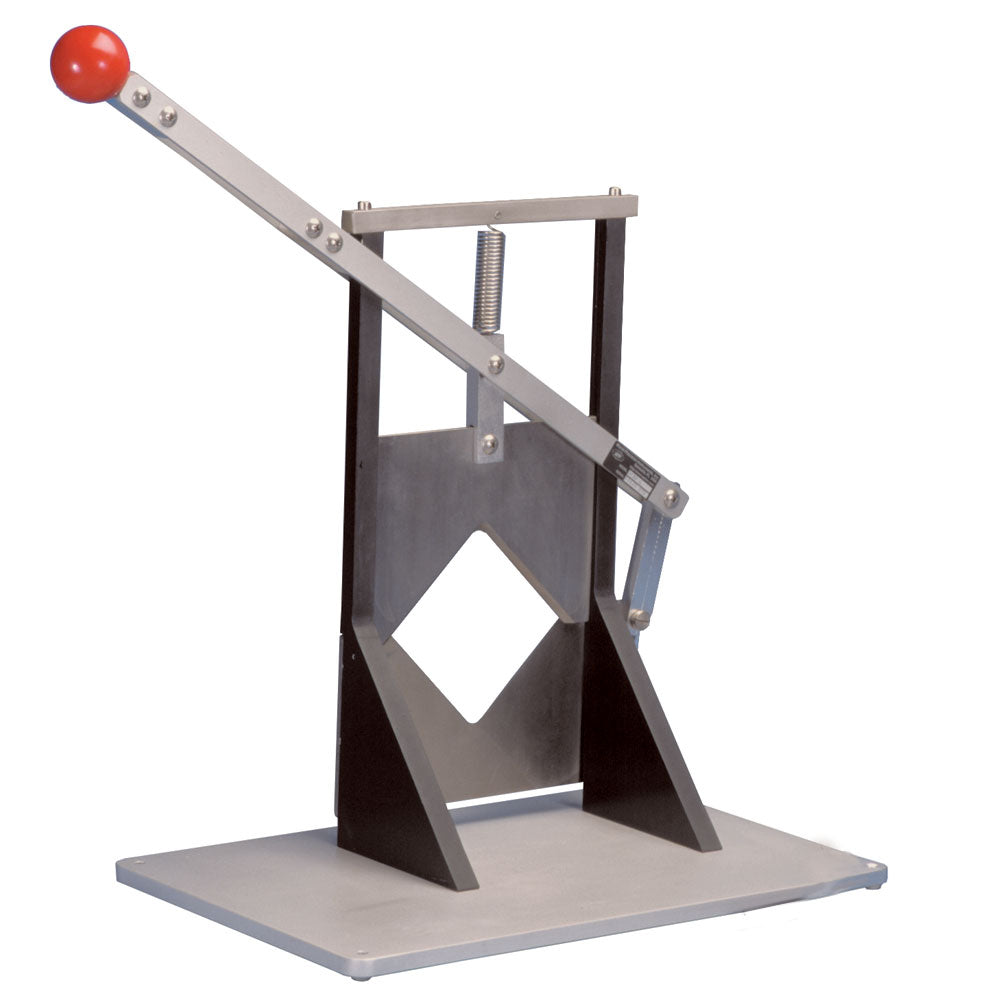
Eigenschaften
- Guillotine für die Forschung an Kleintieren entwickelt
- Drei Größen für Mäuse, Ratten und andere Kleintiere
- Große, stabile Basis
- Gehärtete Klingen gewährleisten viele Jahre Einsatz und bleiben scharf
- Beidhändige Ausführung ermöglicht komfortable Nutzung für Rechts- und Linkshänder
Vorteile
- Magnetische Kraft zieht die Klingen zusammen und sorgt für einen sauberen und präzisen Schnitt durch sehr starke Knochen und Haut für eine schnelle und humane Tötung des Tieres
- Federwirkung verhindert das versehentliche Herunterfallen der Klingen und schützt die Benutzer
- Fluorpolymerbeschichtete Basis erleichtert die Reinigung
Diese Guillotinen sind für Forscher mit Kleintieren konzipiert und in drei Größen erhältlich. Die Guillotine gilt als eine der humansten Methoden zur Tötung von Labortieren. Mit einer einzigen Abwärtsbewegung des Griffs können Sie ein Nagetier schnell und ohne Trauma einschläfern.
Scharfe Edelstahlklingen: Die Klingen bestehen aus gehärtetem Stahl, sodass sie ihre Schärfe behalten und jahrelang einsatzbereit bleiben. Scharfe Klingen machen den Vorgang sowohl für den Forscher als auch für das Versuchstier schnell. Bei richtiger Pflege sind die Edelstahlklingen zudem korrosionsbeständig.
Für Sicherheit entwickelt: Eine robuste Feder oben an jeder Guillotine hält die Klinge sicher in geöffneter Position. Dies verhindert, dass die Klinge versehentlich herunterfällt und Laborpersonal verletzt. Außerdem ermöglicht es eine schnellere Tötung des Versuchstiers, da nur eine einzige Abwärtsbewegung erforderlich ist.
Perfekt für den Laboreinsatz: Diese Guillotine wurde speziell für die Laborarbeit entwickelt. Die große Basis sorgt für mehr Stabilität. Der lange Griff bietet zusätzlichen Hebel. Die Federwirkung verhindert, dass die Klingen unerwartet herunterfallen. Die gehärteten Edelstahlklingen gewährleisten eine lange Lebensdauer des Geräts. Die vereinfachte Konstruktion ermöglicht eine einfache Wartung. Und die fluorpolymere Beschichtung der Basis erleichtert die Reinigung. Die DCAP-Guillotine ist einfach und sicher in Ihrem Labor zu verwenden.
Warum magnetische Klingen? Im Gegensatz zu herkömmlichen Fallmessern, die sich ausschließlich auf die Schwungkraft der Klinge verlassen, sorgt das magnetische Klingen-Ausrichtungssystem dafür, dass beide Klingen während des Schneidvorgangs eng aneinander bleiben. Dies erzeugt einen saubereren Schnitt, reduziert Gewebetrauma und hilft, die Gewebequalität für nachfolgende Anwendungen wie Elektrophysiologie, Histologie, Molekularbiologie und biochemische Analysen zu erhalten.
Optionen
| Bestellcode |
Beschreibung |
| DCAP |
Für Nagetiere / andere kleine Tiere, 1,5 x 1,5 Zoll Öffnung |
| DCAP-M |
Für große Nagetiere / andere mittelgroße Tiere, 2,5 x 2,5 Zoll Öffnung |
| DCAP-L |
Für größere Tiere, 4,0 x 4,0 Zoll Öffnung |
Anwendungen
- Gehirngewebeentnahme
- Herstellung akuter Hippocampus-Schnitte
- Neurowissenschaftliche Forschung
- Elektrophysiologische Studien
- Histologie
- Molekularbiologie
- Pharmakologie
- Gewebeentnahme für RNA- und Proteinanalysen