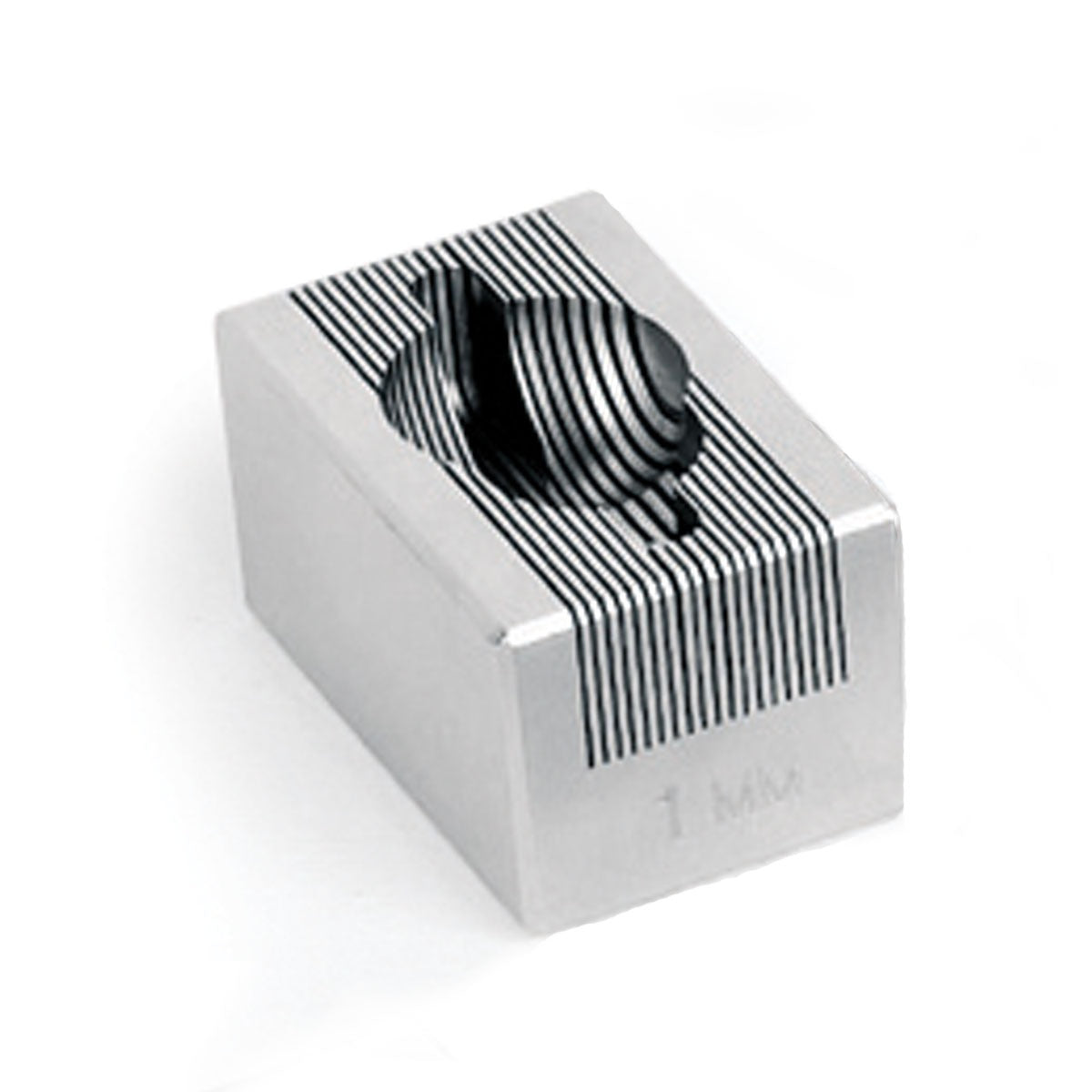
Matrizen für Nagetierhirn, Edelstahl

Zum Produktinformationen springen
1 von 8
Regulärer Preis $345
Verkaufspreis $345 Regulärer Preis

RBMS-200C

Regulärer Preis $345
Verkaufspreis $345 Regulärer Preis

Verwendung

Preise gelten nur in den USA, Kanada und Puerto Rico.

Mit einer WPI-Hirnmatrix erhalten Sie dünne und gleichmäßige Hirnschnitte, was für die histologische Analyse, Immunhistochemie, Molekularbiologie und vieles mehr entscheidend ist. Diese Konsistenz ist für genaue Vergleiche zwischen verschiedenen Gehirnen und experimentellen Bedingungen unerlässlich. Diese WPI-Nagerhirnmatrizen sind aus Edelstahl, einem langlebigen Material, gefertigt. Sie verfügen über präzisionsgeschnittene Kanäle oder Schlitze, die das Gehirn beim Schneiden an Ort und Stelle halten. Wählen Sie Ihre Hirnmatrix basierend auf Ihrer Spezies (Maus oder Ratte) und der Größe des Tieres. Die WPI-Hirnmatrizen sind für Sagittal- oder Koronalschnitte konzipiert. Diese Hirnmatrizen liefern Ihnen konsistente Schnitte mit einer Dicke von 1 mm, und die olfaktorische Spinalkerbe ist in jede Hirnmatrix eingeschnitten. Matrizen können gekühlt und sterilisiert werden. Dies ist nützlich, wenn Wärmeübertragung oder die Aufrechterhaltung eines bestimmten Temperaturbereichs erforderlich ist. Erhalten Sie standardisierte und präzise Hirnschnitte. Verwenden Sie WPI-Hirnmatrizen, um die Reproduzierbarkeit und Genauigkeit Ihrer Experimente für ein besseres Verständnis der Struktur und Funktion des Nagergehirns zu gewährleisten.


Einzelheiten

Eigenschaften

  • Hirnmatrizen aus Edelstahl für Maus und Ratte
  • Sagittale oder koronale Schnitte 
  • Wiederholbare Schnitte, 1 mm Abstand
  • Kann gekühlt und sterilisiert werden
  • Riechnerv/Wirbelsäule/Kerbe in jeder Matrix eingeschnitten

Optionen

Bestellcode Subjekt Schnitt Ein B C D E Hohlraum 
Tiefe
RBMS-200C Erwachsene Maus Koronal 3.18 11.1 8.73 19.1 12.2 7.4
RBMS-200S Erwachsene Maus Sagittal 3.18 11.1 8.73 19.1 12.2 7.4
RBMS-300C Ratte, 175-300 g Koronal 4.76 15.9 12.7 36.6 23.8 7.61
RBMS-300S Ratte, 175-300 g Sagittal 4.76 15.9 12.7 36.6 23.8 7.61
RBMS-600C Ratte, 300-600 g Koronal 4.76 19.8 14.7 36.6 24.7 10.91
RBMS-600S Ratte, 300-600 g Sagittal 4.76 19.8 14.7 36.6 24.7 10.91

Alle Einheiten wiegen 1,0 lb (Versandgewicht) und sind alle aus Edelstahl gefertigt.

Häufig gestellte Fragen

How does a rodent brain matrix work?

A rodent brain matrix supports freshly dissected brain tissue within a precision-machined cavity while evenly spaced slots guide razor blades to create uniform slices. Because every cut follows the same spacing, researchers can obtain reproducible anatomical sections between animals and across experiments.

What is the difference between a coronal and sagittal rodent brain matrix?

A coronal brain matrix produces slices that divide the brain from front to back, creating cross-sectional views commonly used to examine structures such as the cortex, hippocampus, thalamus, and basal ganglia. A sagittal brain matrix creates slices that divide the brain from left to right, making it easier to study midline structures, the cerebellum, brainstem, and longitudinal neural pathways. The best choice depends on the anatomical region being investigated and the requirements of your experimental protocol. WPI offers both coronal and sagittal stainless steel brain matrices for adult mice and rats to support a wide range of neuroscience applications.

Why choose a stainless steel brain matrix instead of an acrylic brain matrix?

Stainless steel brain matrices provide greater durability, dimensional stability, and long-term precision than acrylic alternatives. Unlike acrylic, stainless steel resists scratching, warping, and wear from repeated use, helping maintain consistent slice spacing over time. It can also be chilled before sectioning to help preserve tissue integrity and is compatible with standard laboratory sterilization procedures. For laboratories that perform frequent brain sectioning or require highly reproducible results, a stainless steel brain matrix offers superior longevity and reliable performance compared to acrylic models.

How do I choose the right rodent brain matrix for my application?

Selecting the right brain matrix depends on the species, animal size, and the orientation of the sections required for your study. WPI offers matrices for adult mice, rats weighing 175 to 300 g, and rats weighing 300 to 600 g, each available in both coronal and sagittal configurations. Coronal matrices are commonly used for examining structures such as the cortex, hippocampus, and basal ganglia, while sagittal matrices are preferred for studies involving the cerebellum, brainstem, and midline anatomy. Choosing a matrix that matches your animal model and experimental protocol helps ensure accurate positioning, consistent section thickness, and reproducible results.

Can a stainless steel brain matrix be sterilized?

Yes. WPI stainless steel brain matrices are designed to withstand standard laboratory sterilization procedures and may also be chilled before use when temperature control is important for preserving tissue integrity during sectioning. Unlike acrylic matrices, stainless steel maintains its dimensional accuracy through repeated cleaning and sterilization, making it well suited for laboratories that require long-term durability and consistent performance. Always follow your laboratory's approved cleaning and sterilization protocols to help preserve the instrument's precision and finish.

What thickness of brain sections can a rodent brain matrix produce?

WPI rodent brain matrices feature precision-machined guide slots spaced at 1 mm intervals, allowing researchers to produce consistent 1 mm brain sections. Individual slice thickness is determined by the spacing between the blade guides and the use of standard razor blades. Uniform section thickness improves reproducibility and helps researchers accurately compare anatomical regions across multiple specimens.


Matrizen für Nagetierhirn, Edelstahl

$345.00

Verwandte Produkte

1 von 8