Pinces Dumont n°5

Passer aux informations produits
1 de 7
Prix habituel $63
Prix promotionnel $63 Prix habituel

500341

Prix habituel De $39 à $85
Prix promotionnel De $39 à $85 Prix habituel

Taille de la pointe (mm)

Prix valables uniquement aux États-Unis, au Canada et à Porto Rico.

Informations sur le matériau Dumostar

Très résistant à la fatigue métallique, possède une grande élasticité et est durable (dureté Rockwell de 62). Résistant aux acides minéraux et organiques, au sel. Autoclavable. Plus susceptible de se casser que de se plier. La température maximale que ce matériau peut supporter est de 550° C.


Détails

Caractéristiques

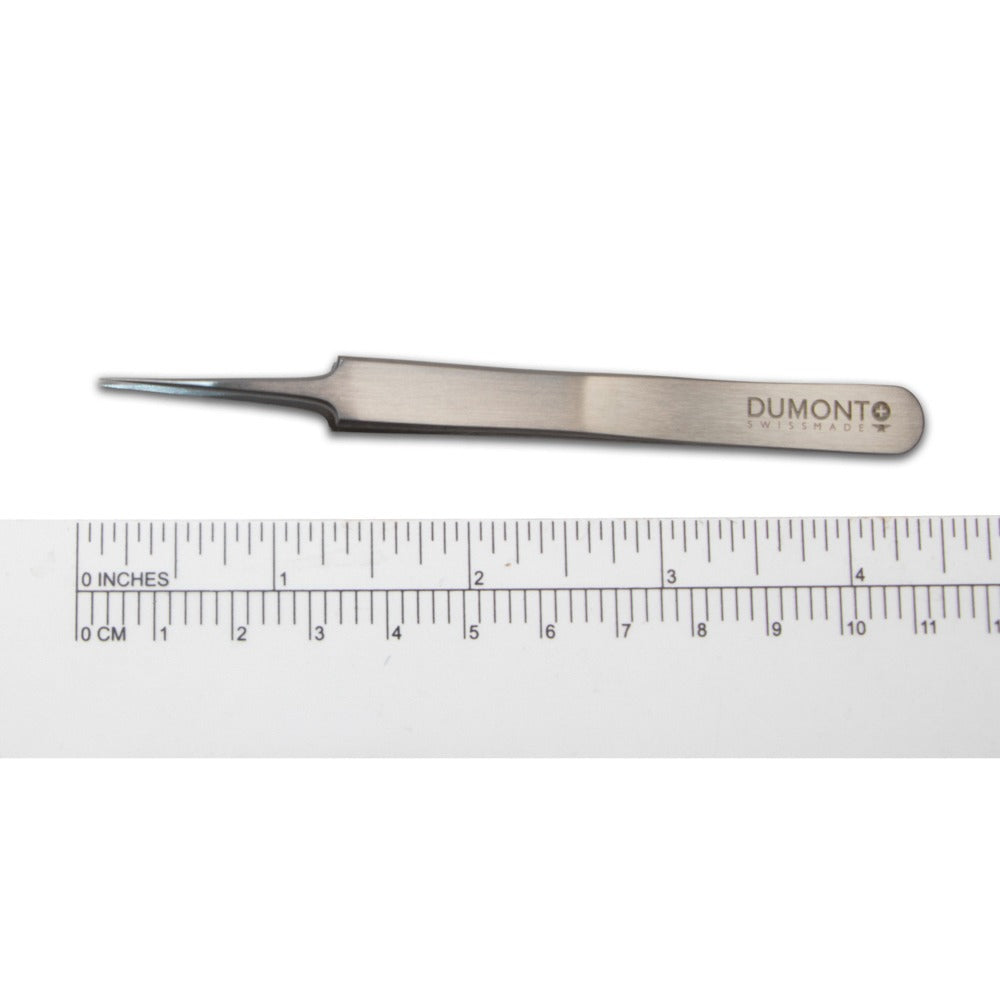
  • Longueur de 11 cm (4,3")
  • Pointes fines
  • Acier inoxydable

Options

Code de commande Taille de la pointe
501985 0.025 x 0.005 mm
500341 0.05 x 0.01 mm
500342 0.10 x 0.06 mm


Informations sur le matériau Inox & Acier inoxydable

Choisissez des pinces en inox ou acier inoxydable pour les applications générales. Elles sont autoclavables, offrent une résistance générale à la corrosion, et une dureté Rockwell de 55-56 qui les rend assez solides pour résister à la casse tout en étant suffisamment flexibles pour se plier légèrement. La température maximale que ces matériaux peuvent supporter est de 350° C et ils sont magnétiques.

Informations sur le matériau Dumoxel

Résistant aux taches, mais légèrement plus doux et moins magnétique que l'acier inoxydable (dureté Rockwell de 36). Résistance accrue à la corrosion grâce à une forte teneur en molybdène et en chrome. Très résistant à l'acide sulfurique, à l'acide chlorhydrique et à d'autres acides minéraux et organiques. Autoclavable. Plus susceptible de se plier que de se casser. La température maximale que ce matériau peut supporter est de 350° C.

Informations sur le matériau Titane

Entièrement sans tache, 40 % plus léger que l'acier inoxydable classique, totalement non magnétique, mais aussi l'alliage le plus doux (dureté Rockwell de 37). Peut être utilisé en milieu corrosif. Autoclavable. La température maximale que ce matériau peut supporter est de 550° C.

Ressources

FAQ

What does the "#5" designation mean on Dumont tweezers?

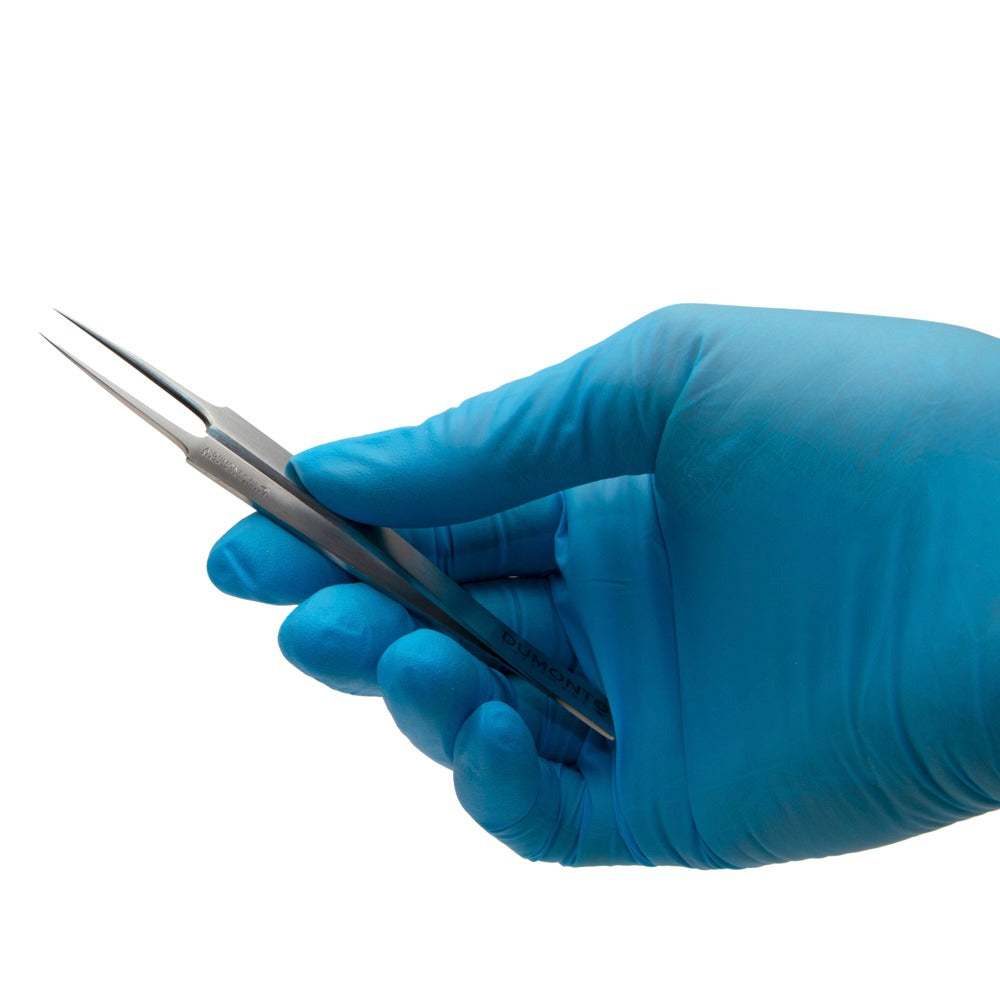
The "#5" designation refers to the tip pattern and geometry of the tweezers, not their overall size. Dumont #5 tweezers are characterized by exceptionally fine, straight tips that provide excellent precision for manipulating delicate tissues, small specimens, microelectrodes, embryos, and other fragile materials. Their fine tip profile makes them one of the most popular tweezer patterns for microsurgery, neuroscience, cell biology, electrophysiology, and other research applications requiring precise control under a microscope.

What is the difference between Dumont #5 and #55 tweezers?

The primary difference between Dumont #5 and Dumont #55 tweezers is the tip geometry. Dumont #5 tweezers feature ultra-fine straight tips that taper gradually to a sharp point, making them ideal for general microsurgery, tissue manipulation, and precision laboratory work. Dumont #55 tweezers have even finer, thinner tips that provide greater precision for handling extremely small or delicate specimens, such as microelectrodes, embryos, or individual cells.

Researchers often choose Dumont #5 tweezers for routine microsurgical procedures and microdissection, while Dumont #55 tweezers are preferred when the highest level of precision is required. Because the finer tips of the #55 pattern are more delicate, they should be handled with extra care to avoid damage.

Are Dumont #5 tweezers suitable for microsurgery?

Yes. Dumont #5 tweezers are among the most widely used precision forceps for microsurgery because their ultra-fine straight tips provide exceptional control when handling delicate tissues and small anatomical structures. They are commonly used in neuroscience, vascular research, ophthalmic research, embryology, electrophysiology, and other microsurgical applications where precise tissue manipulation is essential. Available in three tip sizes, Dumont #5 tweezers allow researchers to select the level of precision best suited to their procedure, from routine microdissection to handling extremely fine vessels, nerves, and tissue samples under a microscope. They are also available with curved tips, angled tips, and 90º tips.

Why are Dumont tweezers considered the standard for precision forceps?

Dumont tweezers have been trusted by researchers and microsurgeons for generations because of their exceptional precision, consistent manufacturing quality, and ultra-fine tip geometry. Designed specifically for delicate tissue manipulation, they provide the control and accuracy required for microsurgery, microdissection, neuroscience, cell biology, embryology, electrophysiology, and other research applications where even slight variations in tip alignment can affect results. Their finely Swiss engineering, finished tips, balanced construction, and reputation for reliability have made Dumont tweezers the benchmark against which many other precision forceps are compared. Whether used for routine laboratory procedures or highly specialized microsurgical techniques, they remain a preferred choice for researchers who demand precise, repeatable performance under the microscope.


Pinces Dumont n°5

$63.00

Produits connexes

1 de 8