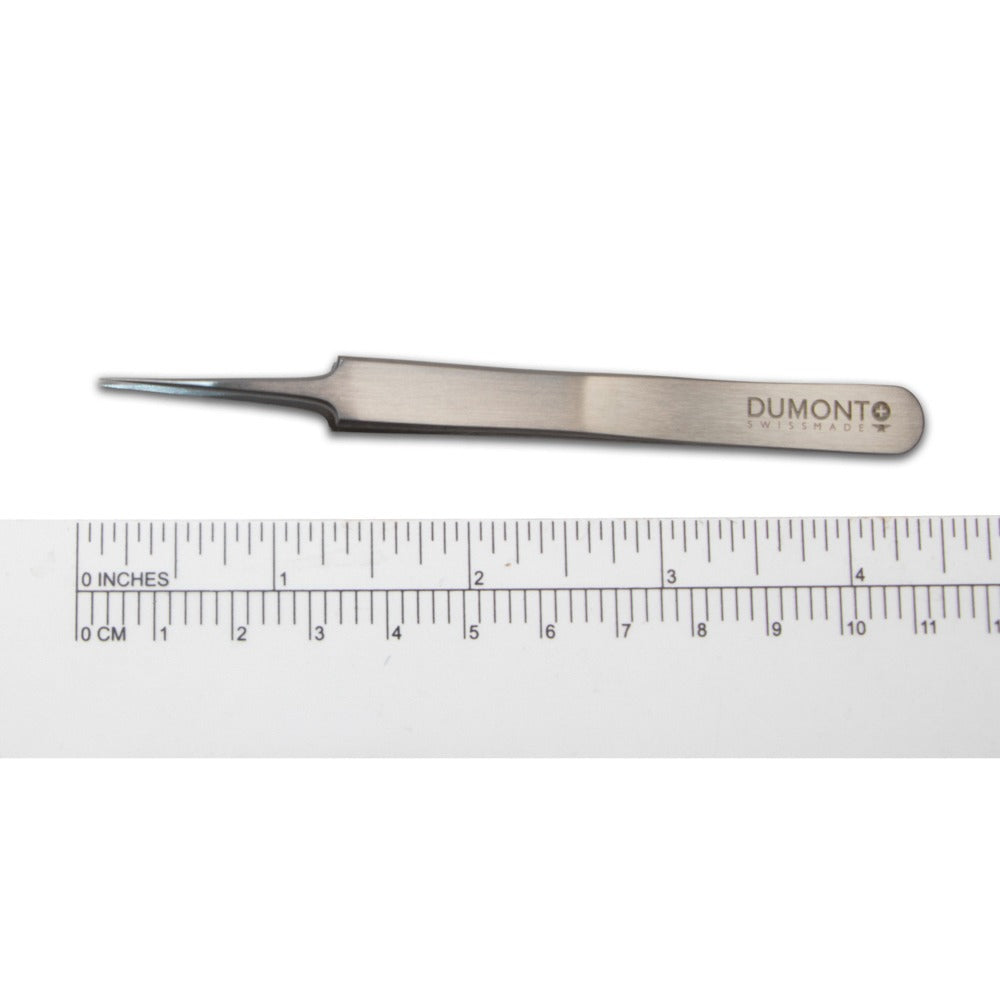
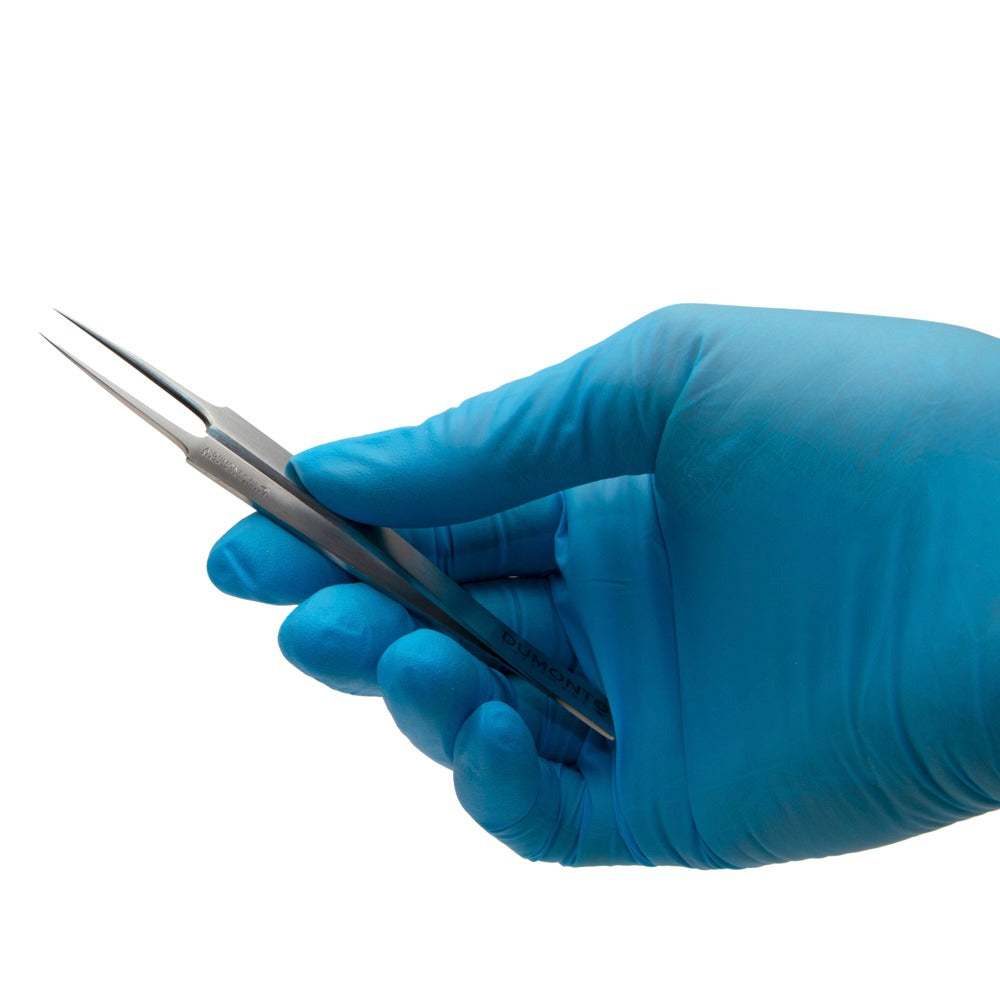
Pinzas Dumont #5, puntas rectas

Ir directamente a la información del producto
1 de 7
Precio habitual $63
Precio de oferta $63 Precio habitual

500341

Precio habitual Desde $39 hasta $85
Precio de oferta Desde $39 hasta $85 Precio habitual

Tamaño de punta (mm)

Precios válidos solo en EE. UU., Canadá y Puerto Rico.

Información del material Dumostar

Altamente resistente a la fatiga del metal, tiene gran elasticidad y es duradero (medición de dureza Rockwell de 62). Resistente a ácidos minerales y orgánicos, sal. Autoclavable. Más propenso a romperse que a doblarse. La temperatura máxima que este material puede soportar es de 550° C.


Detalles

Características

Fabricadas en Suiza según los estrictos estándares de Dumont, estas pinzas de precisión son confiables para laboratorios de investigación en todo el mundo por su alineación constante de la punta y durabilidad excepcional.

  • 11 cm (4.3") de largo
  • Puntas más finas
  • Acero inoxidable

Opciones

Código de pedido Tamaño de la punta Ideal para
501985 0.025 x 0.005 mm Fibras nerviosas ultra finas, embriones, microelectrodos
500341 0.05 x 0.01 mm Microcirugía general y manipulación celular
500342 0.10 x 0.06 mm Disección rutinaria de laboratorio y manejo de muestras

Aplicaciones

  • Investigación en neurociencia
  • Electrofisiología
  • Cultivo celular y tisular
  • Embriología
  • Investigación vascular
  • Investigación de órganos en chip
  • Preparación para microinyección
  • Manejo de muestras histológicas
  • Microdisección
  • Investigación oftálmica
  • Manipulación fina de tejidos
  • Microscopía
  • Posicionamiento del dispositivo

Recursos

Preguntas frecuentes

What does the "#5" designation mean on Dumont tweezers?

The "#5" designation refers to the tip pattern and geometry of the tweezers, not their overall size. Dumont #5 tweezers are characterized by exceptionally fine, straight tips that provide excellent precision for manipulating delicate tissues, small specimens, microelectrodes, embryos, and other fragile materials. Their fine tip profile makes them one of the most popular tweezer patterns for microsurgery, neuroscience, cell biology, electrophysiology, and other research applications requiring precise control under a microscope.

What is the difference between Dumont #5 and #55 tweezers?

The primary difference between Dumont #5 and Dumont #55 tweezers is the tip geometry. Dumont #5 tweezers feature ultra-fine straight tips that taper gradually to a sharp point, making them ideal for general microsurgery, tissue manipulation, and precision laboratory work. Dumont #55 tweezers have even finer, thinner tips that provide greater precision for handling extremely small or delicate specimens, such as microelectrodes, embryos, or individual cells.

Researchers often choose Dumont #5 tweezers for routine microsurgical procedures and microdissection, while Dumont #55 tweezers are preferred when the highest level of precision is required. Because the finer tips of the #55 pattern are more delicate, they should be handled with extra care to avoid damage.

Are Dumont #5 tweezers suitable for microsurgery?

Yes. Dumont #5 tweezers are among the most widely used precision forceps for microsurgery because their ultra-fine straight tips provide exceptional control when handling delicate tissues and small anatomical structures. They are commonly used in neuroscience, vascular research, ophthalmic research, embryology, electrophysiology, and other microsurgical applications where precise tissue manipulation is essential. Available in three tip sizes, Dumont #5 tweezers allow researchers to select the level of precision best suited to their procedure, from routine microdissection to handling extremely fine vessels, nerves, and tissue samples under a microscope. They are also available with curved tips, angled tips, and 90º tips.

Why are Dumont tweezers considered the standard for precision forceps?

Dumont tweezers have been trusted by researchers and microsurgeons for generations because of their exceptional precision, consistent manufacturing quality, and ultra-fine tip geometry. Designed specifically for delicate tissue manipulation, they provide the control and accuracy required for microsurgery, microdissection, neuroscience, cell biology, embryology, electrophysiology, and other research applications where even slight variations in tip alignment can affect results. Their finely Swiss engineering, finished tips, balanced construction, and reputation for reliability have made Dumont tweezers the benchmark against which many other precision forceps are compared. Whether used for routine laboratory procedures or highly specialized microsurgical techniques, they remain a preferred choice for researchers who demand precise, repeatable performance under the microscope.


Pinzas Dumont #5, puntas rectas

$63.00

Productos relacionados

  • 14101_1

    Pinzas Dumont #5, punta curva o doblada

    Múltiples SKUs

    Precio habitual Desde $57 hasta $79
    Precio de oferta Desde $57 hasta $79 Precio habitual
  • 14095_1

    Pinzas Dumont #5, 11cm, Puntas 0.05 x 0.01mm, Biología

    14095

    Precio habitual $80
    Precio de oferta $80 Precio habitual
  • 500340_1

    Pinzas Dumont #4, 11 cm

    Múltiples SKUs

    Precio habitual Desde $37 hasta $57
    Precio de oferta Desde $37 hasta $57 Precio habitual
  • 500338

    Pinzas Dumont #3, 12 cm, puntas 0.17x0.10 mm

    500338

    Precio habitual $38
    Precio de oferta $38 Precio habitual
  • 500336_1

    Pinzas Dumont #2

    Múltiples SKUs

    Precio habitual Desde $42 hasta $60
    Precio de oferta Desde $42 hasta $60 Precio habitual
  • 14096_2

    Pinzas Dumont de titanio

    Múltiples SKUs

    Precio habitual Desde $49 hasta $53
    Precio de oferta Desde $49 hasta $53 Precio habitual
  • 14188_1_1_1

    Pinzas Dumont Dumoxel

    Múltiples SKUs

    Precio habitual Desde $45 hasta $99
    Precio de oferta Desde $45 hasta $99 Precio habitual
  • 500337_1_1

    Pinzas Dumont Dumostar

    Múltiples SKUs

    Precio habitual Desde $64 hasta $98
    Precio de oferta Desde $64 hasta $98 Precio habitual
1 de 8